For years, composite decking has been marketed as the “low-maintenance” answer to traditional wood. Longer warranties. Less upkeep. No staining. No splinters. No worries.
But outdoor living spaces don’t exist in perfect conditions — they exist in sun, rain, snow, freeze-thaw cycles, spilled drinks, dragged furniture, and years of daily life. And over time, homeowners often discover there’s a difference between a material that simply lasts… and one that actually ages well.
That’s where real wood continues to stand apart.
Durability vs Aging: What Happens to Composite and Real Wood Decking Over Time
Every outdoor material changes over time. The question isn’t whether your deck will weather; it’s how it will weather.
Composite decking is designed to preserve its original appearance for as long as possible. But in reality, exposure to UV, heat, moisture, and structural movement can eventually reveal wear in ways that are difficult to reverse: fading, waviness, surface inconsistencies, scratches, plug failures, and expansion-related movement.
And unlike natural wood, composite materials are difficult to restore once damaged.
Scratches can’t simply be sanded out. Discontinued product lines can make board replacement frustrating. Surface patterns can repeat artificially across boards, creating a manufactured appearance that becomes more noticeable over time. Real wood behaves differently. Wood accepts aging as part of its character. Grain evolves, color softens, and texture develops. A high-quality wood deck doesn’t try to resist nature, it responds to it naturally.
A Reddit user shares a specific example that composite customers are dealing with:
“Did you drag a heavy coffee table across the deck and scratch a board? You call the lumberyard but they inform you that the Trex Lineage 3000 with cool max technology in ocean mist gray is actually discontinued, but you could go with the Timber tech ultra 5000 with patented wood grain stamp technology in Adirondack gray and it should match pretty well. It doesn’t.”
Why Designers Still Prefer Natural Real Wood
There’s a reason architects and designers continue specifying real wood in high-end residential and hospitality projects.
No synthetic product can fully replicate the depth, warmth, variation, and tactile experience of natural wood. Every board is unique. Grain patterns tell a story of growth, climate, and time. The material feels grounded because it is grounded — it comes directly from nature, not from a mold designed to imitate it.
As Steve Butler from Thermory USA Territory Manager explains:
“Real wood provides warmth, natural sound attenuation, and a connection to the natural world that you simply cannot obtain with engineered or composite materials.”
That connection matters, especially in outdoor spaces designed for slowing down, gathering, and reconnecting with the environment around us. This is biophilic design in action.
How Real Wood Outperforms Composite in Heat, Touch, and Outdoor Comfort

One of the biggest overlooked differences between real wood and composite decking is comfort.
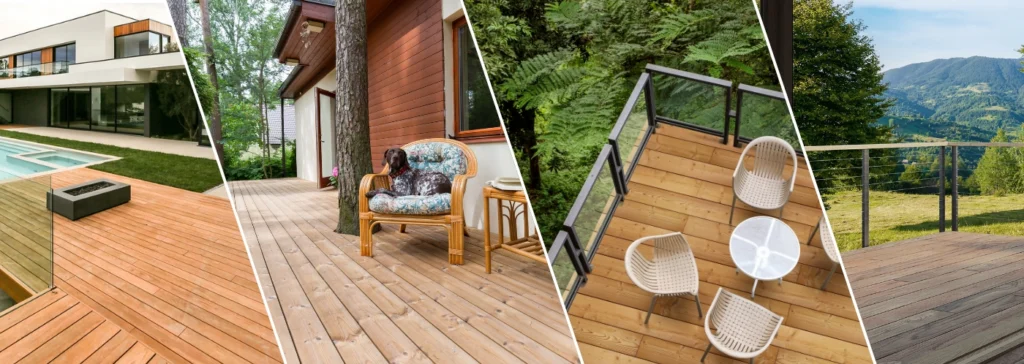
Wood naturally regulates temperature more effectively than many synthetic materials, helping it remain more comfortable underfoot during hot summer days. It also absorbs and releases moisture naturally, rather than trapping heat like dense plastic-based products often can.
Thermally modified wood takes this a step further.
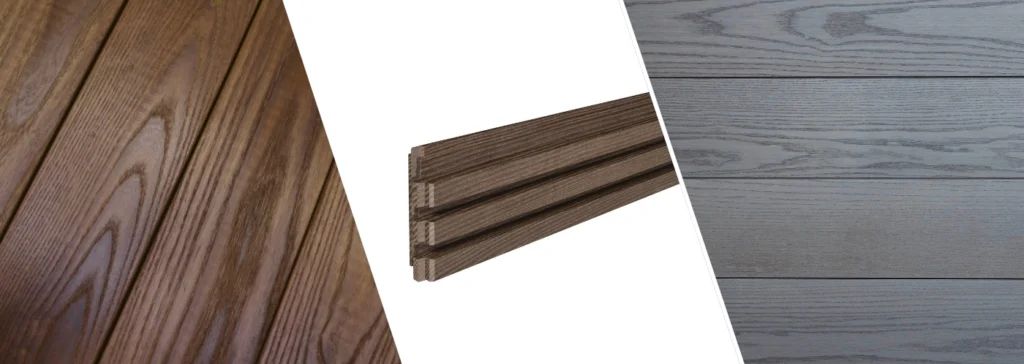
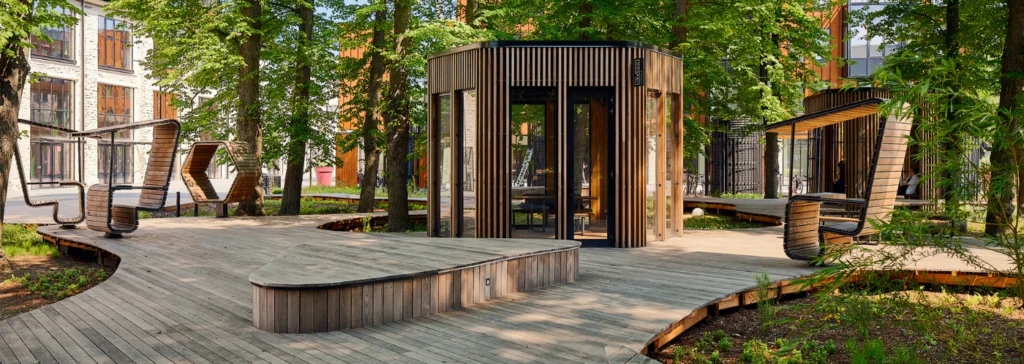
Through a chemical-free thermal modification process, Thermory enhances the stability and durability of real wood using only heat and steam, refining the material rather than replacing it with synthetic alternatives.
The result is a product that offers:
- Improved rot resistance
- Reduced swelling and shrinking
Without sacrificing the natural character people are drawn to in the first place.
Sustainability Starts With Real Wood
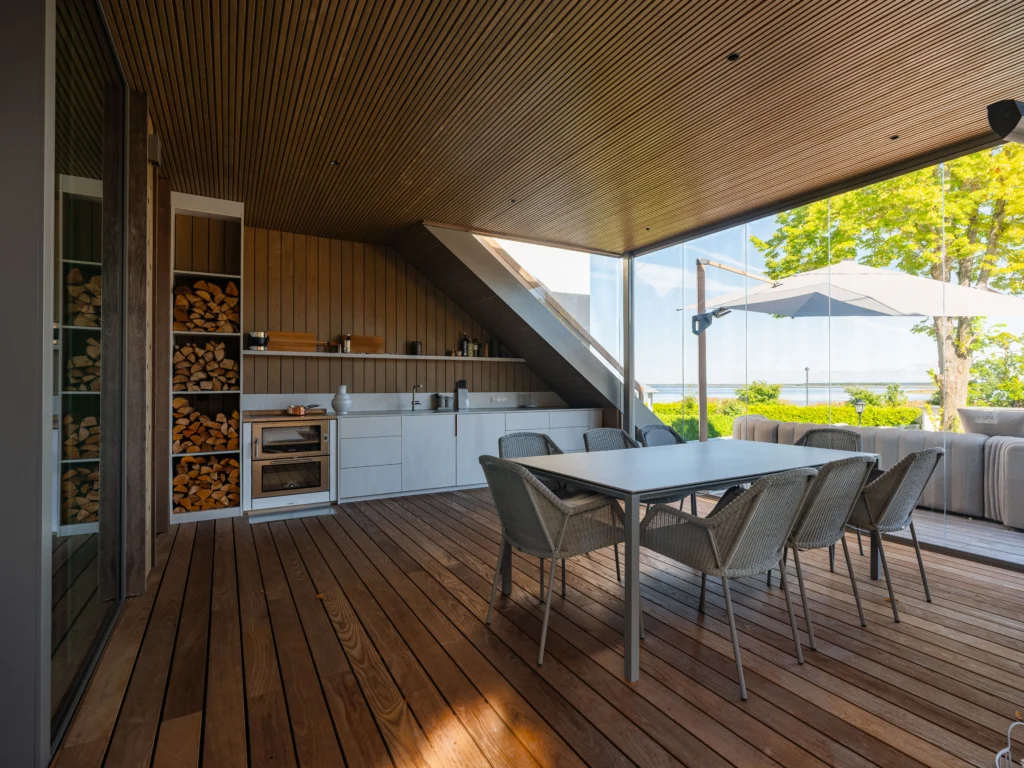
Unlike composite decking filled with plastics and synthetic binders, Thermory starts with real wood and enhances it naturally using only heat and steam, no toxic chemical treatments ever.
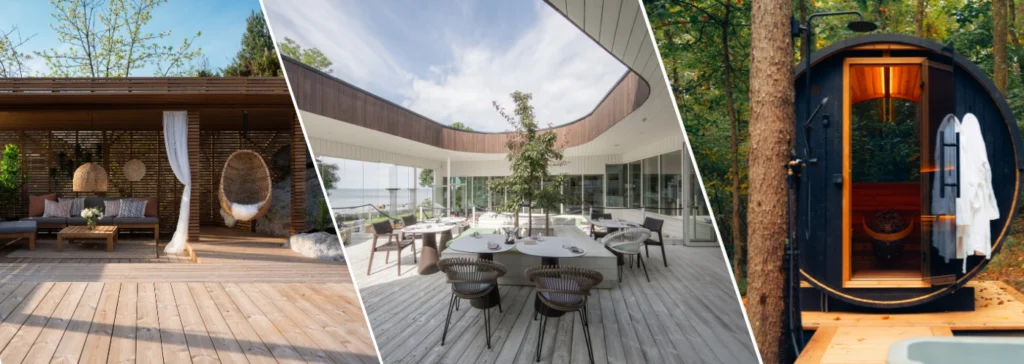
For Chicago-based architect Lisa Jaffe and a special project that she calls “Pure Michigas”, sustainability meant choosing materials designed to age naturally within the landscape.
“After exploring several cladding options, we chose Thermory for its beautiful character, natural patina and longevity. Its weathered, silvery finish worked beautifully inside and out—on the main house, the pool house, and in the foyer.”
Sustainability isn’t just about longevity — it’s about using natural materials that age gracefully, endure responsibly, and maintain a connection to the environment around them.
Is Composite Decking Really Maintenance-Free? The Reality Explained
No outdoor material is truly maintenance-free.
Composite decking still requires cleaning and care, and it can still fade, scratch, stain, or move over time. Real wood requires realistic expectations too, especially when it comes to color evolution and weathering.
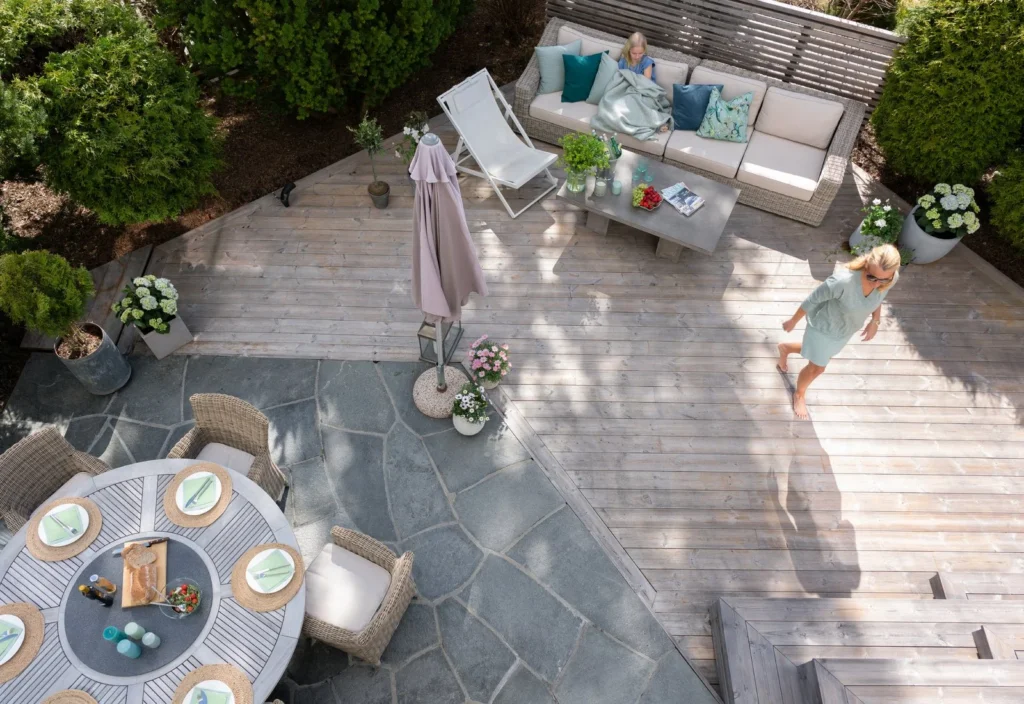
Thermally modified wood is still wood. That mean it may crack or scratch slightly or develop patina over time depending on climate and exposure. Left untreated outdoors, many wood species naturally silver as UV exposure changes the surface color. But unlike composite, wood remains repairable.
Boards can be sanded. Refinished. Replaced individually. Restored instead of discarded.
And for many homeowners and designers, that ability to renew a material (rather than replace an entire system) is part of what makes wood more sustainable long term.
The Case for Natural Wood in Outdoor Architecture and Deck Design
The push toward synthetic building materials has created a market full of products engineered to imitate natural ones. But imitation and replacement are not the same thing.
At Thermory, we believe the future of outdoor design isn’t about making plastic look more like wood. It’s about refining real wood to perform better, while preserving everything people love about it.
As Steve Butler puts it:
“We are refining a natural product, not creating one.”
Explore our sustainably-sourced, real wood collections.
Photo Credits: Tõnu Tunnel. Karl Kasepõld. Street Juice Film. Moelven.