When wildfire risk becomes part of the building equation, wood shouldn’t leave the conversation!
Across the country, architects, builders, and homeowners are paying closer attention to fire performance—particularly in Wildland-Urban Interface (WUI) areas, where exterior materials can be subject to specific ignition-resistance and fire-performance requirements.
For projects where real wood is part of the design vision, that raises an important question:
What are your options for fire-treated wood—and how do they compare?
There isn’t one universal answer. Fire-retardant wood comes in several forms, and the differences can matter when it comes to treatment method, appearance, durability, weather exposure, species, availability, and code requirements.
Not All Fire-Retardant Treatments Are the Same
One of the biggest distinctions is how the fire-retardant treatment gets into the wood.
Some treatments are applied to the surface. Others are impregnated into the wood itself.
According to Matt Stansell, Thermory USA Building Products Manager, that distinction is becoming increasingly important as standards and code requirements evolve.
“Topical treatments typically wash off after a few rains. The ICC (International Code Council) is setting standards to accept only impregnation treatments.”
The takeaway isn’t that every topical product is automatically unsuitable. It’s that architects and builders should look closely at the treatment method, testing, and requirements for the specific application rather than assuming that all fire-retardant wood products perform the same way.
Surface-Applied Treatments
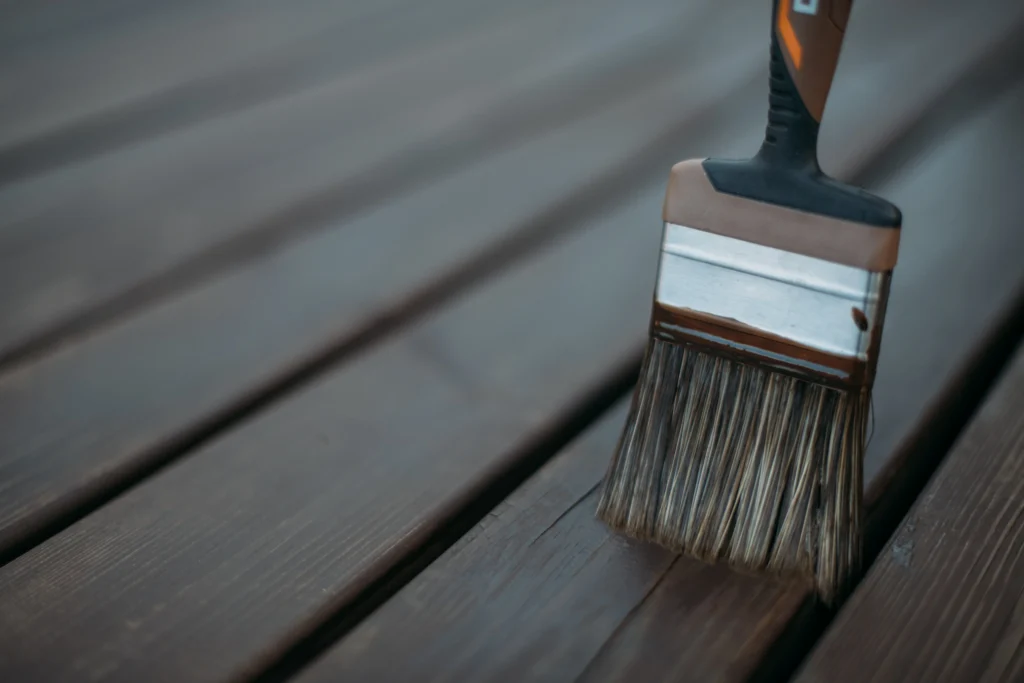
Topical or surface-applied fire-retardant treatments are applied to the exterior of the wood rather than impregnated throughout the material.
Potential advantages:
- Can be applied to existing wood in some applications
- Can provide a fire-retardant surface
- May allow greater flexibility in the underlying wood product
Considerations:
- Exterior exposure and weathering can be important factors
- Performance can depend on the specific treatment and application
- Cutting, machining, refinishing, and maintenance may affect performance
- The product should be evaluated against the requirements of the intended assembly
Impregnation Treatments
Impregnation treatments take a different approach, introducing the fire-retardant chemistry into the wood rather than relying solely on a surface application.
Two products you’ll encounter in this category are BurnBlock and Chemco by SaferWood, which is used with Thermory’s fire-retardant offerings.
BurnBlock
BurnBlock is a salt-based fire-retardant treatment that is impregnated into wood.
Potential advantages:
- Impregnation treatment
- Designed to provide fire-retardant performance within the wood
- Available for a variety of wood products
Considerations:
As with any treatment, architects and builders should evaluate the specific product documentation, intended exposure, appearance, and performance requirements.
Stansell notes:
“With salt-based treatments, leaching and the finished appearance are important considerations, particularly for exterior applications where the wood will be highly visible.”
Chemco by SaferWood + Thermory


Thermory takes another approach by combining thermally modified wood with an impregnated fire-retardant treatment.
Thermory wood is thermally modified using heat and steam, without chemical preservatives. For applications requiring enhanced fire performance, select Thermory products, like Benchmark Ash and Pine, can be paired with Chemco by SaferWood / Thermex-FR.
This gives architects another option:
Real wood + thermal modification + impregnated fire-retardant treatment.
Thermal modification itself isn’t a substitute for a fire-retardant treatment. Instead, the two technologies address different performance characteristics.
Thermal modification helps improve dimensional stability and moisture behavior, while the fire-retardant treatment is designed to address fire performance. Together, they create a wood system for applications where both characteristics matter.
Pressure-Impregnation Treatments
Pressure-impregnation uses pressure in a specialized treatment vessel to help drive fire-retardant chemicals into the wood, rather than relying on a surface application alone.
An option in this category is Hoover ExteriorFireX (EFX), designed for exterior wood applications, including lumber and plywood exposed to weather and moisture.
According to Hoover, ExteriorFireX is designed to achieve a Class A flame-spread rating under ASTM E84 testing. Available in several wood species, including Southern Yellow Pine, Douglas Fir, Western Red Cedar, and Redwood, it offers another option for projects requiring fire-retardant-treated wood.
Potential advantages:
- Pressure-impregnated fire-retardant treatment
- Designed for exterior applications exposed to weather and moisture
- Available in multiple wood species
Considerations:
- Species availability may vary by supplier and order
- Finishes and weather exposure requirements should be confirmed
- Verify product testing and code compliance for the intended application
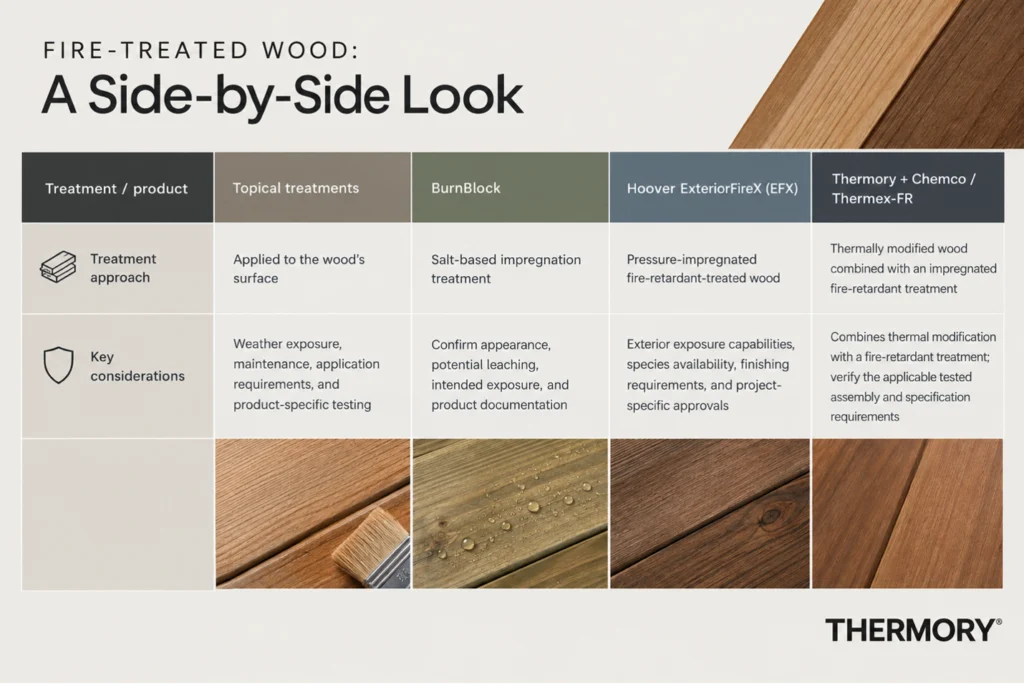
Fire-Treated Wood: A Side-by-Side Look
The right choice depends on the project.
There is no one-size-fits-all fire-treated wood product.
What About WUI Requirements?
This is where the conversation gets more specific.
Wildland-Urban Interface requirements vary by jurisdiction and application. A material isn’t simply “WUI compliant” in every situation because it carries a particular treatment.
The product, profile, installation method, and overall assembly can all matter.
That’s why architects and builders should verify:
- Applicable local WUI requirements
- Required fire-performance standards
- Product-specific testing
- Species and profile
- Approved installation methods
- Substrate and assembly requirements
- Fastener requirements
- Field-cutting and finishing requirements
- Current manufacturer documentation
In other words:
Don’t specify a treatment. Specify a tested system.
Why Fire Performance Is Becoming a Bigger Wood Conversation
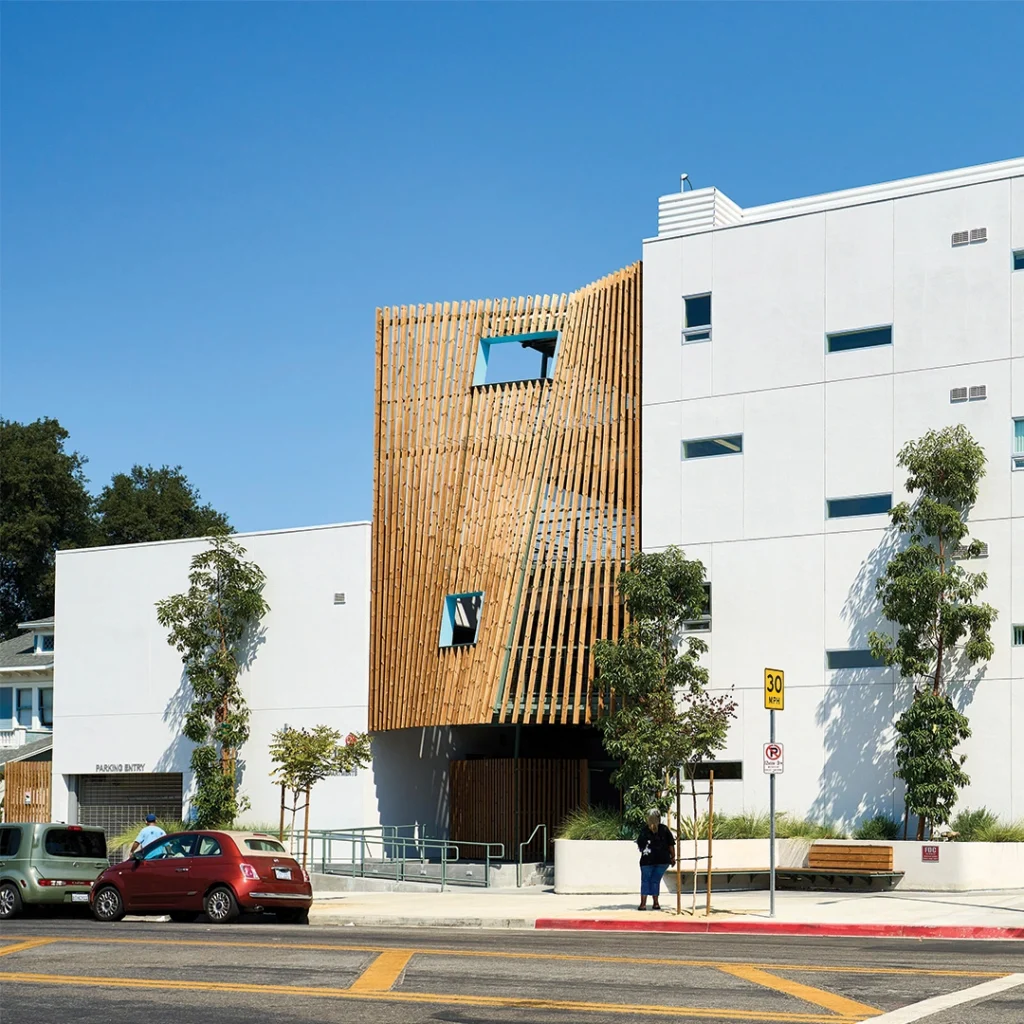
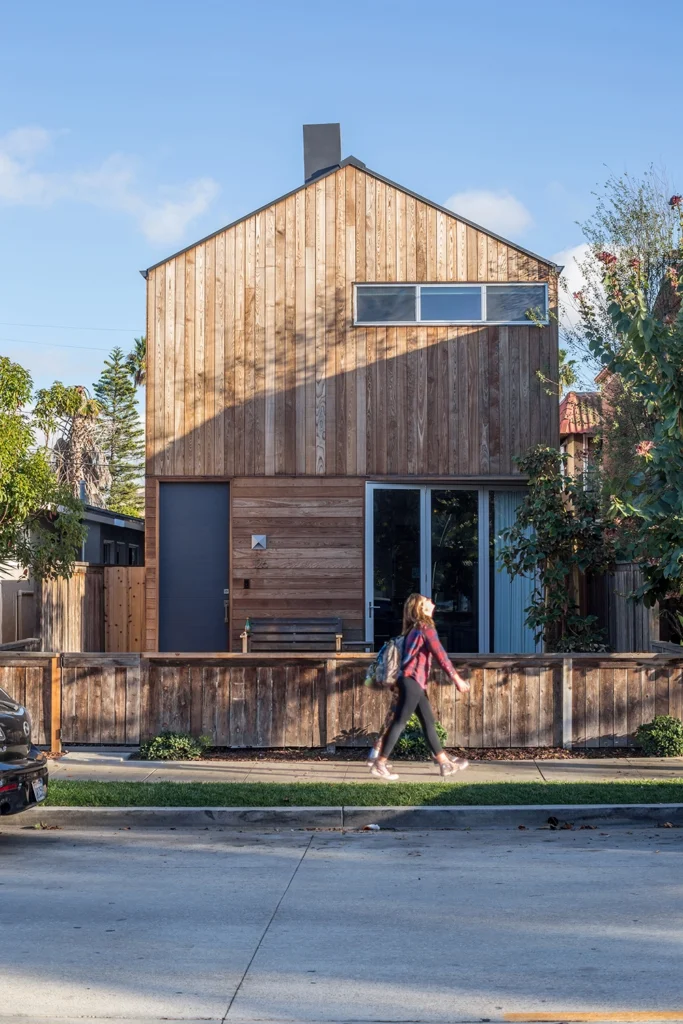
For years, the conversation around exterior wood has centered on durability, maintenance, aesthetics, and cost. Those things still matter, but in wildfire-prone areas, another question is becoming increasingly important: How does this material perform when fire is part of the equation?
As fire-performance requirements become an increasingly important part of exterior design, choosing the right wood means looking beyond appearance to understand how a product is treated, tested, and intended to perform. For projects where real wood is part of the vision, Thermory’s combination of thermal modification and available fire-retardant treatment options offers another possibility worth exploring.
We believe the products we offer should be backed by proven technology and trusted expertise. That’s why we chose to partner with SaferWood, powered by Chemco’s Thermex-FR technology. With decades of experience in fire-retardant-treated wood, SaferWood brings a long track record of performance, consistent quality, and solutions designed for demanding exterior applications. Its products are evaluated for compliance with the International Wildland-Urban Interface Code (IWUIC) and meet California OSFM 12-7A requirements, making this partnership an important part of how we help architects and builders explore real-wood options for projects where fire performance matters.
Talk to Thermory USA about our fire-safe wood options for your next project.