30 years ago, Thermory was built on a simple idea: sustainably sourced, renewable lumber could be transformed through thermal modification to deliver the durability and performance people had come to expect from tropical hardwoods.
That idea still drives us today.
For decades, tropical hardwoods dominated the conversation around premium exterior wood.
Ipe. Teak. Cumaru.
They’ve earned their reputation. They’re dense, hard and naturally durable—and for a long time, they were the answer when a project demanded serious exterior performance.
But as research and care for the environment increased, the wood industry started evolving and considering eco-friendly options that would provide just as much durability.
This is where thermal modification was born.
From the beginning, Thermory saw the potential in taking a beautiful, renewable hardwood like ash and using thermal modification to fundamentally change how it performs outdoors. Heat and steam transform the wood, improving its dimensional stability and resistance to moisture and decay while bringing out a rich, warm color.
The result?
A hardwood that can stand confidently in the same conversation as premium tropical species.
For us, this conversation started decades ago, and we’re still having it.
So, let’s talk about ash.
But first: Why is the industry still using tropical hardwoods?
Before the industry knew better, tropical hardwoods were a go-to when a project demanded serious durability. They’re dense, hard, and naturally resistant to decay. And they can last for decades outdoors.
But there’s another part of that story worth considering:
Where does that wood come from?
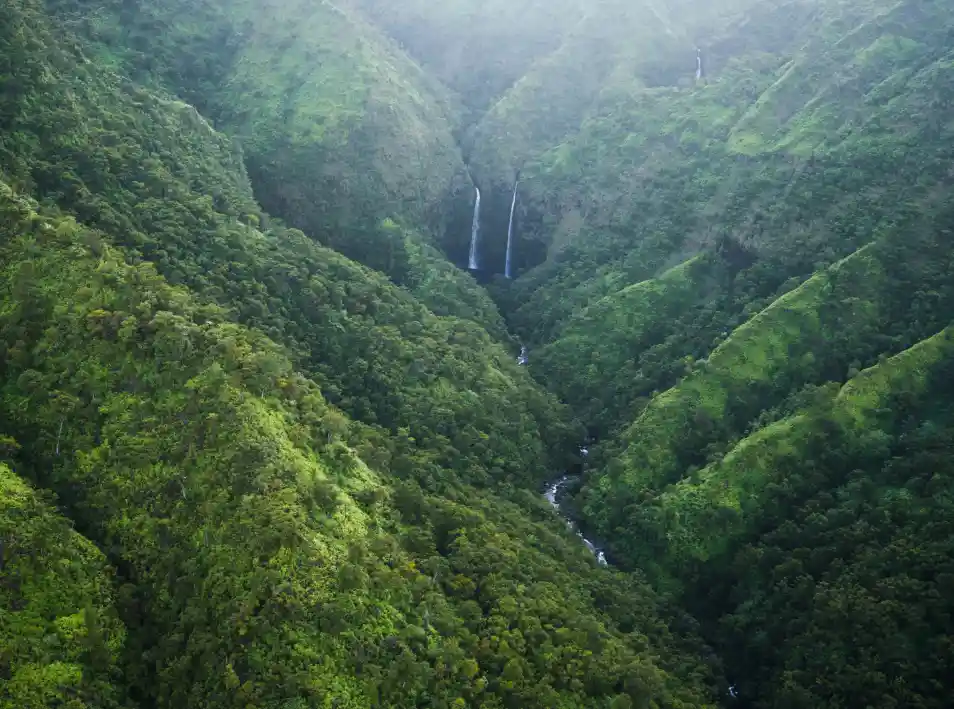
Tropical forests are incredibly complex ecosystems, and commercial timber extraction is one of several pressures contributing to forest loss and degradation.
The stakes are bigger than a single building material. In 2025, the world lost 10.6 million acres of tropical primary rainforest—the equivalent of roughly 11 soccer fields every minute, according to the World Resources Institute (WRI). Tropical forests are critical carbon stores, biodiversity hotspots and regulators of water cycles, so their loss has consequences far beyond the forest itself.
That doesn’t mean every tropical hardwood project is irresponsible. Responsible forestry exists, certification exists, and sourcing matters. But it does mean that architects, designers and homeowners have another question available to them:
Do I need a tropical hardwood at all?
Meet the Sustainable Alternative to Tropical Hardwoods That’s Built to Last
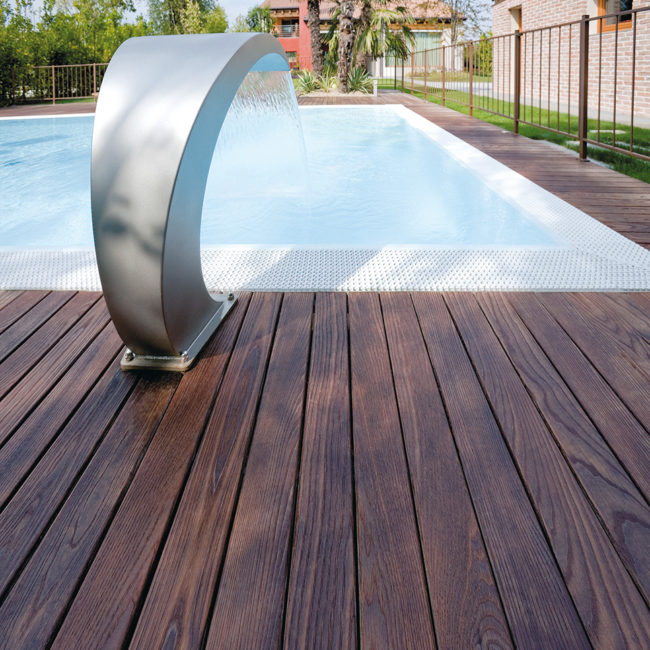
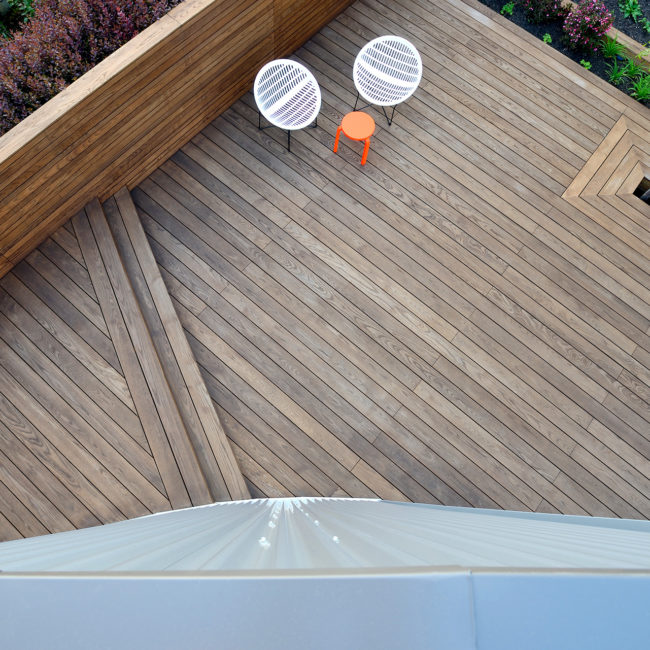
Thermally modified ash starts with a naturally tough hardwood. White ash has a Janka hardness rating of about 1,320 lbf, and the USDA describes it as heavy, hard, strong and stiff, with high shock resistance.
Ash was already tough. Then we thermally modified it.
Using only heat and steam, thermal modification reduces the wood’s relationship with moisture, improving dimensional stability and biological durability for demanding outdoor applications.
The result? Real hardwood with serious outdoor performance, 25+ years of rot resistance—and the warmth, character and beauty that only real wood can deliver.
Hard? Absolutely.
Beautiful? Obviously.
Built for the outdoors? That’s the point.
For decks, porches, rooftop terraces, cladding and other high-end exterior applications, thermally modified ash brings together the durability, stability and natural beauty designers and builders are looking for without defaulting to tropical hardwoods.
Ash isn’t soft, delicate or precious. It’s a genuinely solid, dense hardwood with a long history of being used for demanding applications—from tool handles to sporting equipment like baseball bats, to high-traffic flooring. That inherent strength matters when your deck is expected to handle people, animals, furniture, pool traffic, and the wear and tear of everyday life.
Q & A
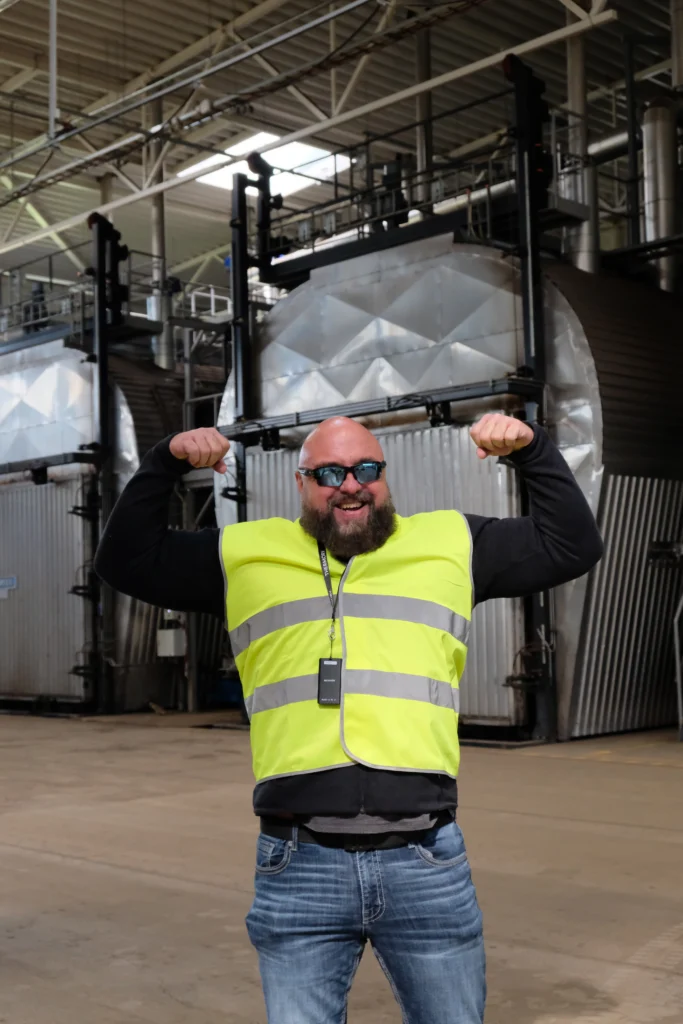
We spoke with Steve Butler, Thermory USA Pacific Northwest Territory Manager, about what makes thermally modified ash such a compelling alternative to tropical hardwoods. Here’s what he had to say.
Q: What makes Thermory Benchmark Ash different from other hardwood decking products?
Steve: Our thermally modified ash decking is essentially a cabinet-grade hardwood product for the outdoors. Our proprietary grading criteria are extremely stringent—we allow virtually no defects. Even FAS (Firsts and Seconds), one of the highest grades for hardwood lumber, allows more defects than our standards. The result is a highly consistent, usable product from board to board.
Q: How does Thermory Benchmark Ash compare when it comes to installation and waste?
Steve: Our grading, combined with our JEM (Joint End Matched) profile, means there’s very little waste when the product is installed properly by a skilled contractor. The waste factor can be less than 5%. That means customers are getting a lot more usable material from what they purchase, and that can translate into significant savings compared to tropical hardwoods.
Q: What are some of the practical advantages of working with ash instead of tropical hardwoods?
Steve: Thermally modified ash is significantly lighter than many tropical hardwoods, which makes it easier on your back and easier on your tools. It also cuts, routes, drills and mills beautifully with typical woodworking equipment. You don’t need to budget for specialized blades and drill bits, and ash doesn’t produce the same caustic, harmful dust associated with some tropical hardwoods.
Q: What gives customers confidence in the long-term performance and availability of Thermory Benchmark Ash?
Steve: We’ve been developing and testing our ash for decades. It has been tested for strength, durability and rot resistance, and we have timber relationships dating back virtually 30 years, giving us a secure supply of fiber that meets our grading criteria. And we’ve been around longer than our 25-year warranty—which is something not every manufacturer can say.
Ash isn’t the only hardwood we’ve transformed for demanding exterior applications. Thermory USA offers a range of species, including Kodiak Spruce and Red Oak, with 25+ year durability ratings, giving architects, designers and builders more options to choose the right wood for the project. Because you don’t need a rainforest to build a premium deck—you just need the right wood, engineered to perform.
Explore our decking collections today. Request a sample.
* Read more on the shift away from Ipe and Cumaru, as they are now listed under CITES (the Convention on International Trade in Endangered Species). This means stricter regulations on international trade, new paperwork, and potential delays, fines, and rising costs for those trying to import them into the U.S. and Canada.