If you spend enough time on Reddit (or in a showroom), you’ll hear it:
“It’s good stuff… but pricey.”
Fair enough. Our thermally modified wood isn’t bargain-bin lumber. It was never meant to be. But when it comes to thermally modified wood cost, the real question is: pricey compared to what?
When you compare the right Thermory product to the right alternative, the conversation starts to look very different.
Cedar vs. Thermory: A Familiar Starting Point
For many homeowners, cedar is the standard. And in many markets, STK (Select Tight Knot) cedar decking lands in a similar price range as Thermory Benchmark (knotty) Pine.
As Steve Butler, Pacific Northwest Territory Manager, explains:
“Our knotty pine products are priced similarly to STK cedar in most markets, and we provide incredible, long-lasting value. Our clear pine products are often priced significantly better than clear mixed grain cedar.”
The same conversation happens with siding and shingles.
In coastal regions like Cape Cod and Long Island, cedar shingles often run between $5–7 per square foot. According to Cristian de Rosa, CEO and former Northeast Territory Manager, that’s where perspective matters.
“At first, people are turned off entirely to the idea of a more expensive shingle. But when I can show them that our ash will last three times longer than the cedar shingle on the coast, it puts us right in line with their material cost.”
Calculate three replacement cycles of cedar over 20 years versus a single installation of thermally modified ash. Add labor, disposal, and the disruption of replacing a façade multiple times, and suddenly the discussion isn’t about material cost alone – it’s about lifecycle value.
Tropical Hardwoods vs. Thermory
Sometimes our Benchmark Ash gets compared to entry-level composites, making it seem expensive at first glance. A more appropriate comparison is to tropical hardwoods like Ipe.
As Butler puts it:
“Tropical wood species, high-end composites, and clear vertical grain cedar products all cost as much or more than our ash in decking and cladding applications.”
This is the category where Thermory truly competes: premium wood and premium composite products. Within that category, thermally modified ash delivers advantages that matter to both homeowners and contractors, including sustainability (no rainforest wood!), exceptional dimensional stability, predictable performance, and zero grading defects.
Composites vs. Thermory
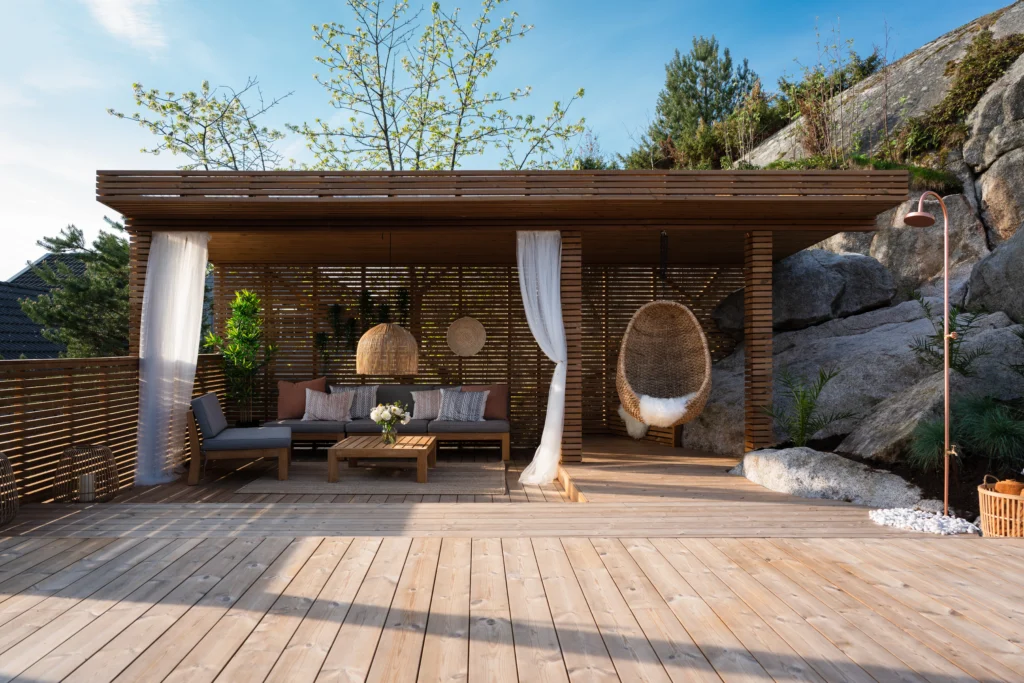
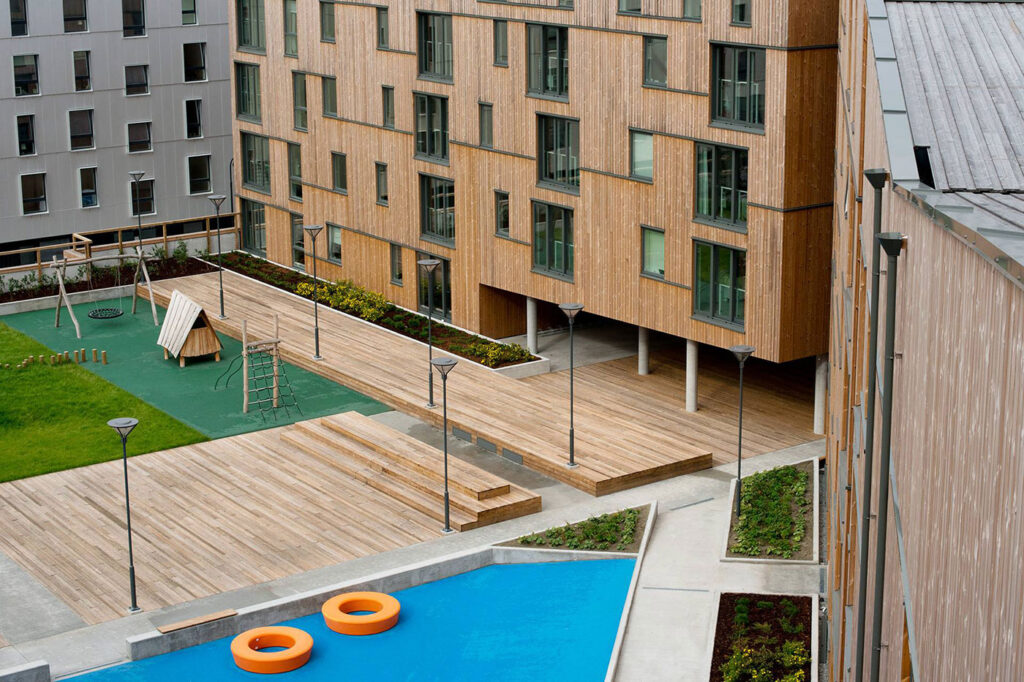
In the Northeast, Thermory Benchmark Pine decking typically falls in the same general range as many mid-tier composite products.
Cristian addresses the comparison directly:
“Are we the cheapest available material on the market? Of course not. But when you look at the benefits and the longevity of Thermory, it quickly becomes a no-brainer.”
What are homeowners getting in return?
- Real wood aesthetics and natural character
- A biophilic connection that synthetic materials can’t replicate
- Greater dimensional stability
- Long service life when properly maintained
Thermory: The Value Most Price Comparisons Miss
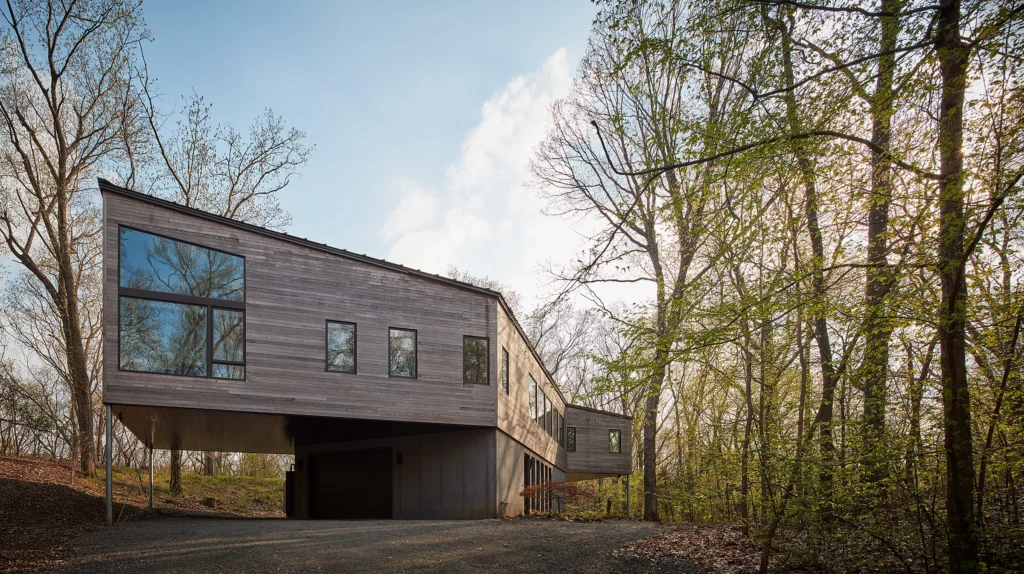
Price per square foot rarely tells the whole story. One of the reasons contractors appreciate Thermory is that value extends beyond the board itself.
As Steve explains:
“Thermory offers joint end matching, superior grading with no defects, and smaller bundle sizes. All of these helps add value by reducing waste.”
Kim Thompson from Inside Sales sees the same thing in daily conversations with customers:
“The stability of the wood is invaluable. With proper maintenance, it can last more than 25 years. The JEM joint helps reduce waste during installation, and the quality of the lumber means you don’t have to worry about twisted boards, making the entire process smoother and more efficient.”
Thermory Pricing Explained: Quality, Consistency, and Long-Term Value
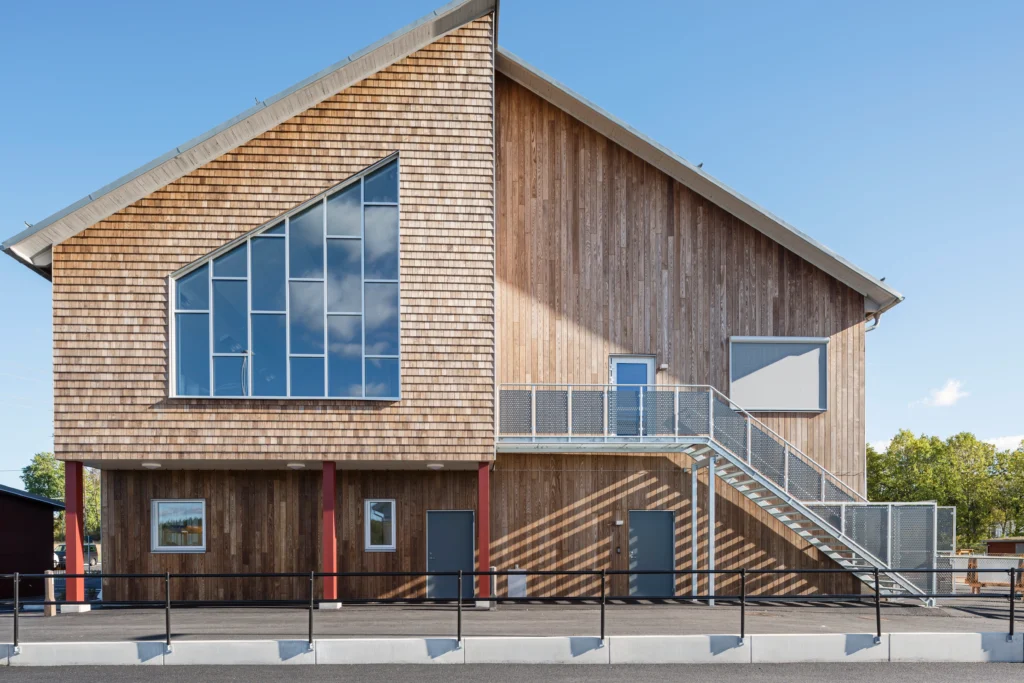
Part of Thermory’s value comes from more than the wood itself. Every board is thermally modified using a carefully controlled process backed by decades of expertise, advanced testing, and rigorous quality control. It’s the kind of consistency that gives builders confidence and ensures long-term performance.
Steve says it best:
“Thermory isn’t for everyone, but we have products that provide value at every pricing tier now. All of this, and a warranty to back up our value. I like to tell people that it’s ‘real wood with a warranty.'”
We’re offering real wood, engineered stability, reduced waste, long-term durability, and a warranty that stands behind the product. So yes, if you’re comparing Thermory to the lowest-cost material available, it may seem expensive. But when you compare it to cedar over multiple replacement cycles, unsustainable tropical hardwoods, or even many mid-range composites, the picture changes.
The further you look beyond the initial price tag, the more “pricey” starts to look a lot more like value.
Photo Credits: Semple + Rapp Architects. Tom Harris Photography. Estkowski Construction. Karl Kasepõld.