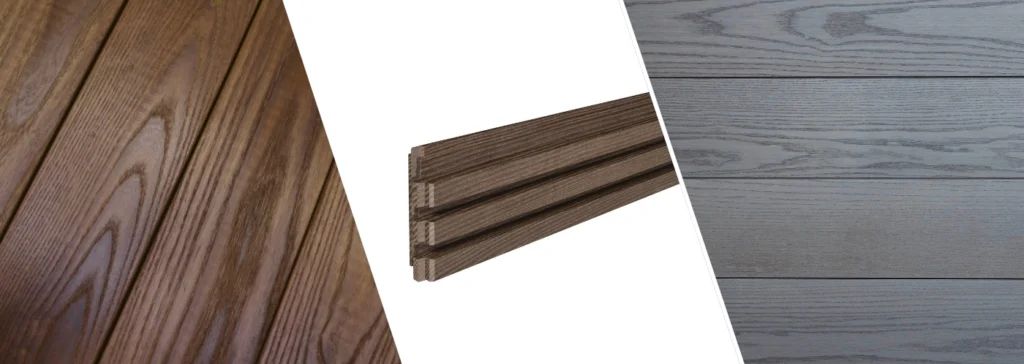
Choosing the right wood for a project isn’t just about picking a species you like.
When you’re specifying thermally modified wood, the species you choose can influence everything that comes next—from the look and feel of the finished project to the profile, installation method and finish.
So where do you start?
At Thermory USA, we like to break the process into three decisions:
Species →
Profile →
Finish
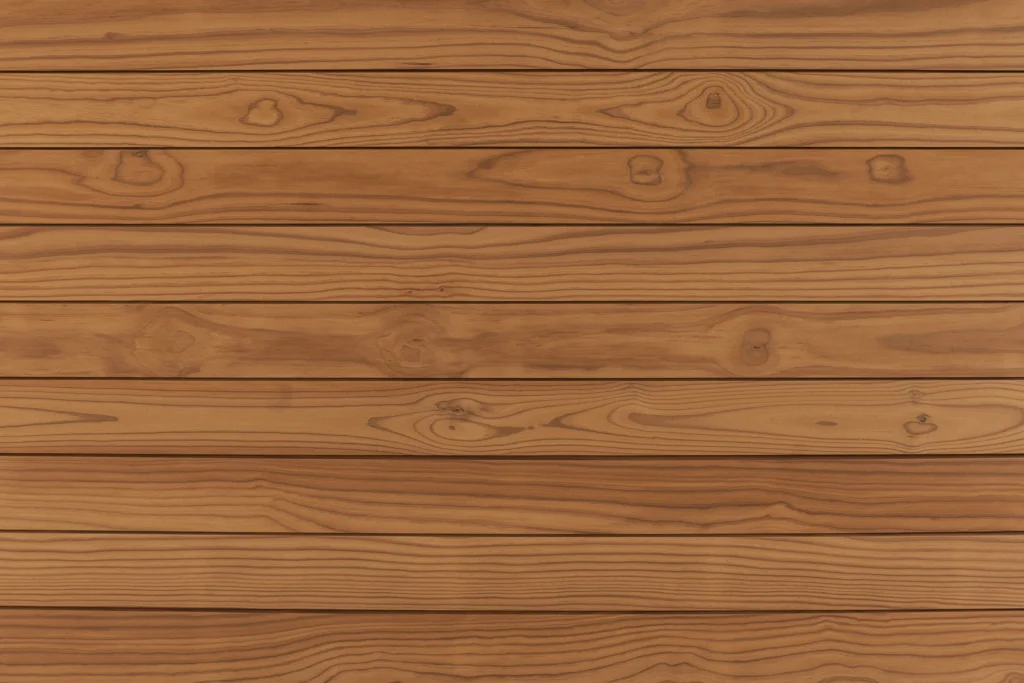
Radiata Pine
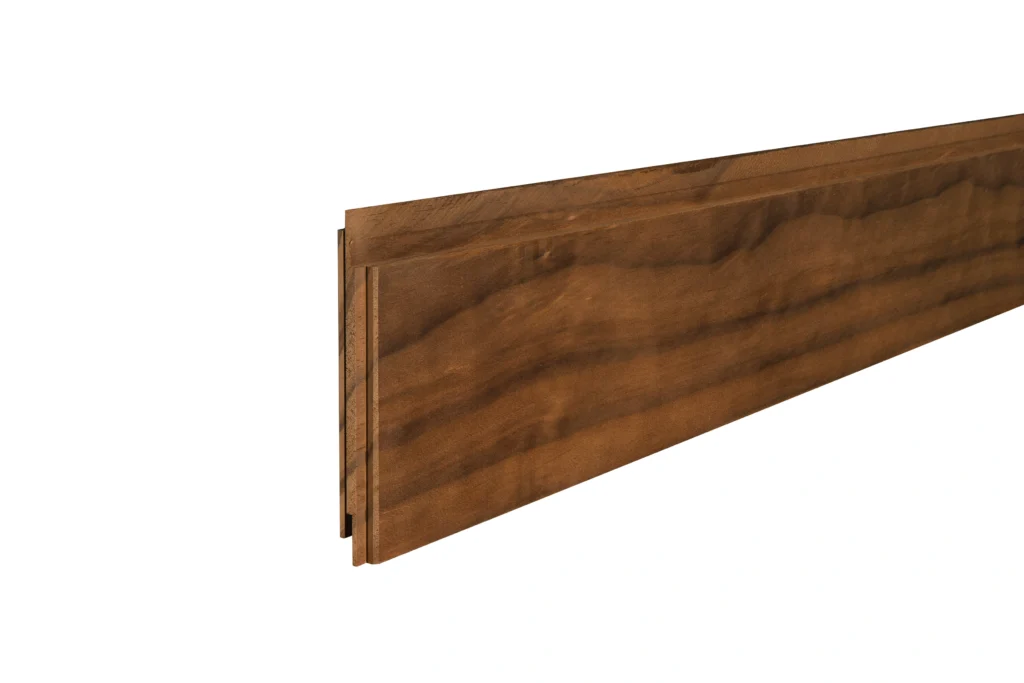
C96
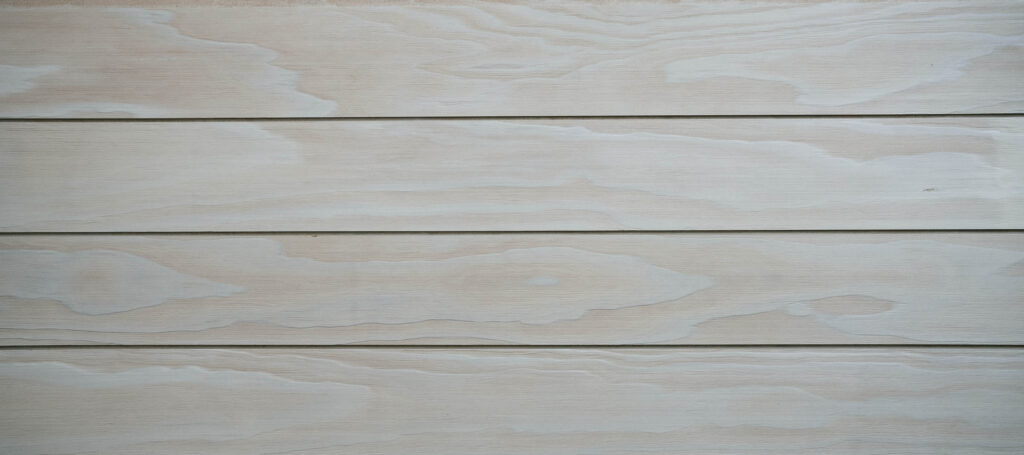
Vivid Coastal White
We asked Sean Leary, Director of Sales, to walk us through how he approaches each step.
Step 1: Start With the Species
Q: What’s the first thing you consider when helping a customer select a thermally modified wood product?
Sean: Let’s build a base to work on, starting by selecting a species. The species of wood, or the type of tree that we select, can influence every other choice we make when selecting a thermally modified wood.
There are four primary factors we consider: durability, hardness or resistance to wear and foot traffic, the appearance of the grain, and cost.
Those considerations help narrow the field quickly.
Thermory offers thermally modified hardwoods and softwoods, and each brings a different combination of characteristics to a project.
Softwood vs. Hardwood: What’s the Difference?
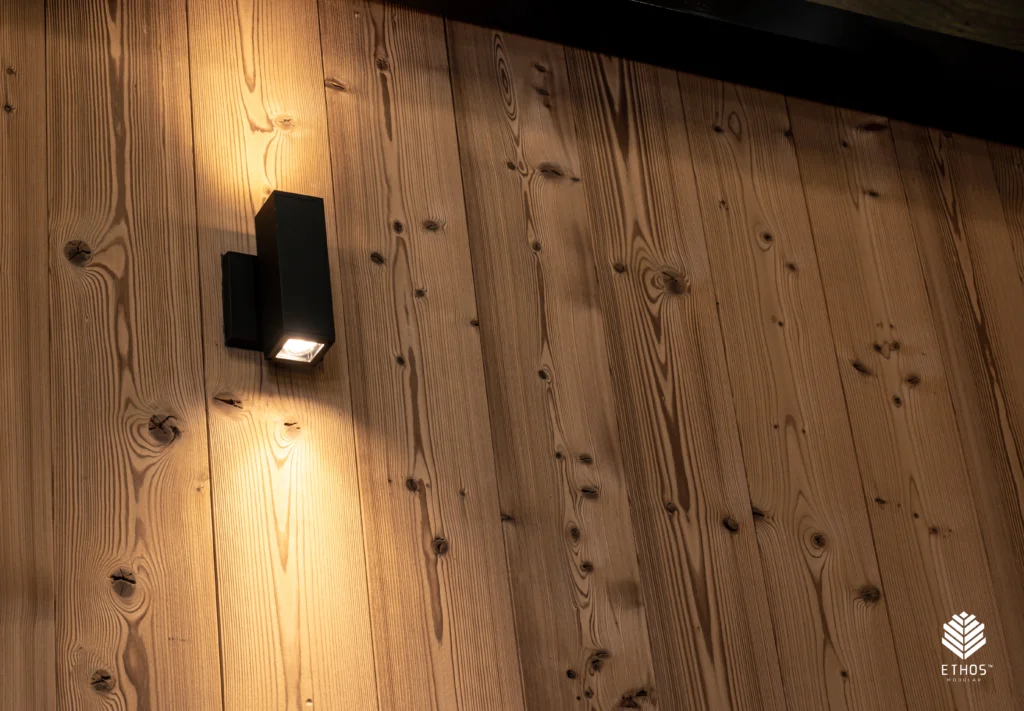
Kodiak Spruce
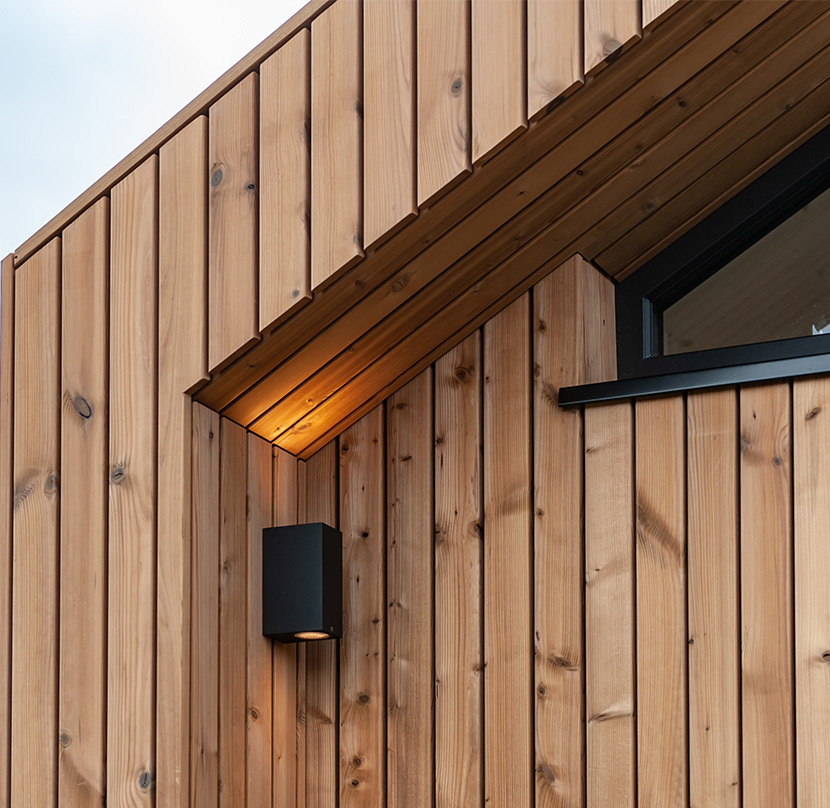
Benchmark Pine
Q: How does species character come into play?
Sean: Softwoods like spruce and knotty pine have the presence of knots, while our clear pine and ash are knot-free.
That distinction can have a significant impact on the finished appearance.
Thermory Benchmark Pine (Scots Pine), for example, has the natural knots and character you’d expect from pine, creating a warmer, more rustic appearance. Benchmark Clear Pine (Radiata Pine) offers a different look. Because clear pine comes from a faster-growing tree, the grain is wider and has more visual interest than the more tightly gathered grain punctuated with branching knots on knotty pine.
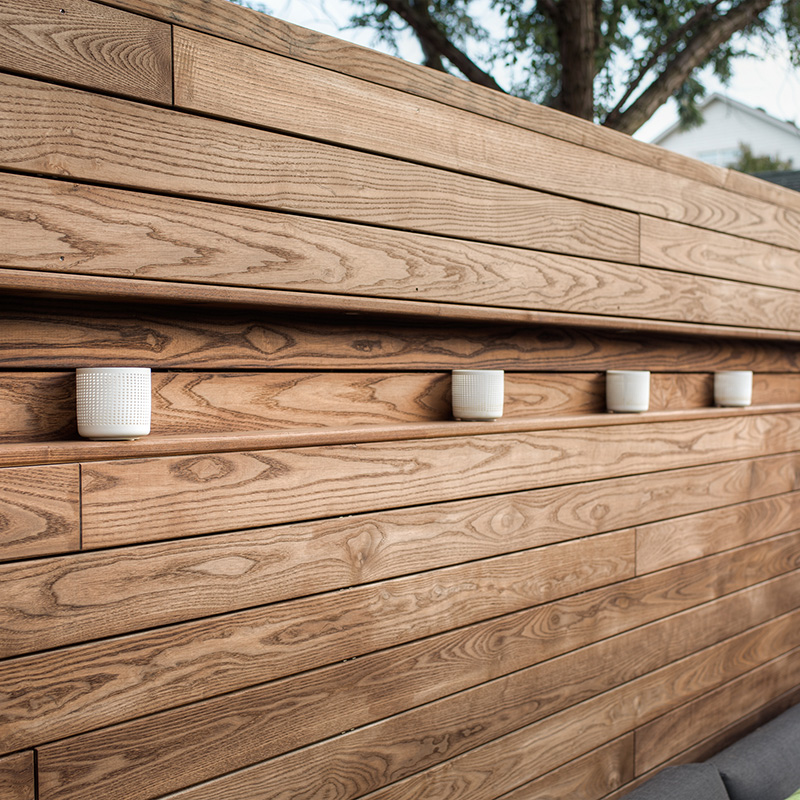
Benchmark Ash
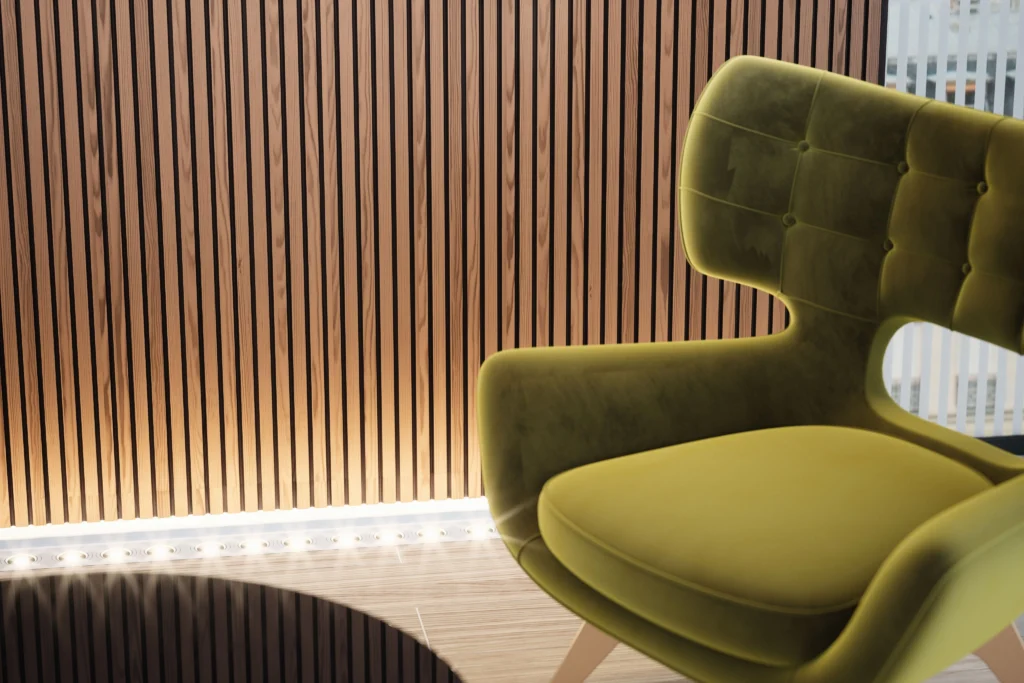
Benchmark Clear Pine
And then there’s Benchmark Ash, a hardwood with a naturally refined grain and a knot-free appearance.
In other words, choosing a species isn’t simply choosing a color. You’re choosing the character of the wood itself.
What About Cost?
Species can also affect the overall project budget.
Sean: Spruce and pine are lower cost, while clear pine and ash have a premium for being knot-free.
That doesn’t mean one species is “better” than another. It means different species can make sense for different project priorities.
A project where warmth, natural variation and value are priorities might point toward a softwood. A project where a clean, refined appearance is essential might make a knot-free species the better fit.
What About Wear and Foot Traffic?
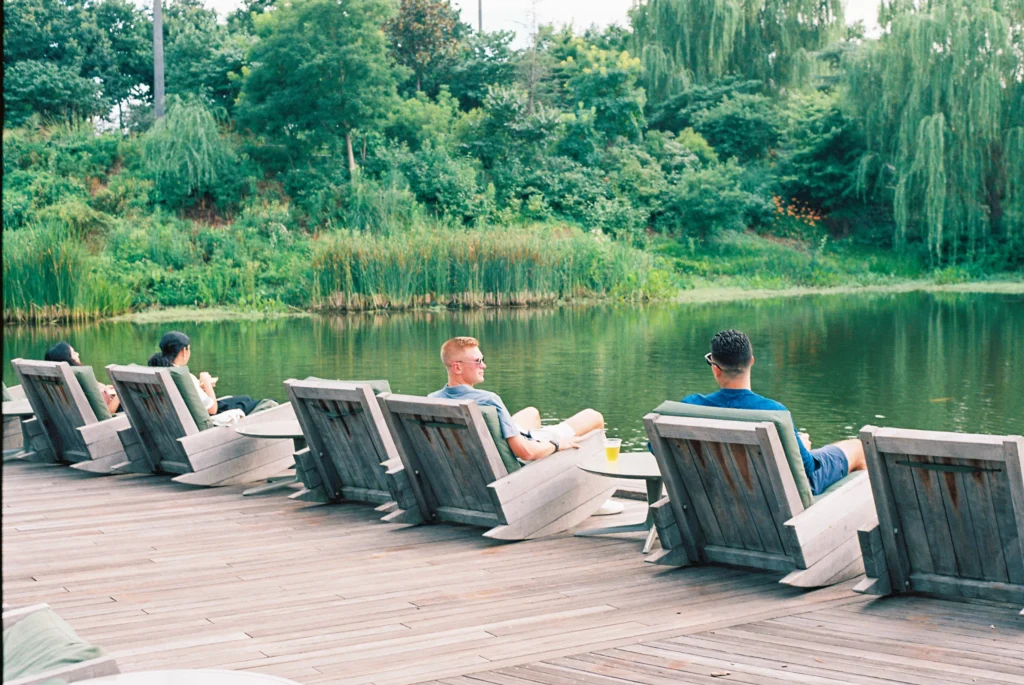
Hardness is another important consideration—particularly for decking and other areas where people will regularly walk, sit and move furniture.
Sean: Softwoods like spruce, pine and clear pine are excellent options, but very high-traffic areas or those concerned about mechanical wear can consider a denser, tougher hardwood such as our ash.
So the first question isn’t necessarily:
“Which species looks the best?”
It’s:
“Which species gives us the right combination of appearance, performance and cost for this project?”
Step 2: Choose Your Profile
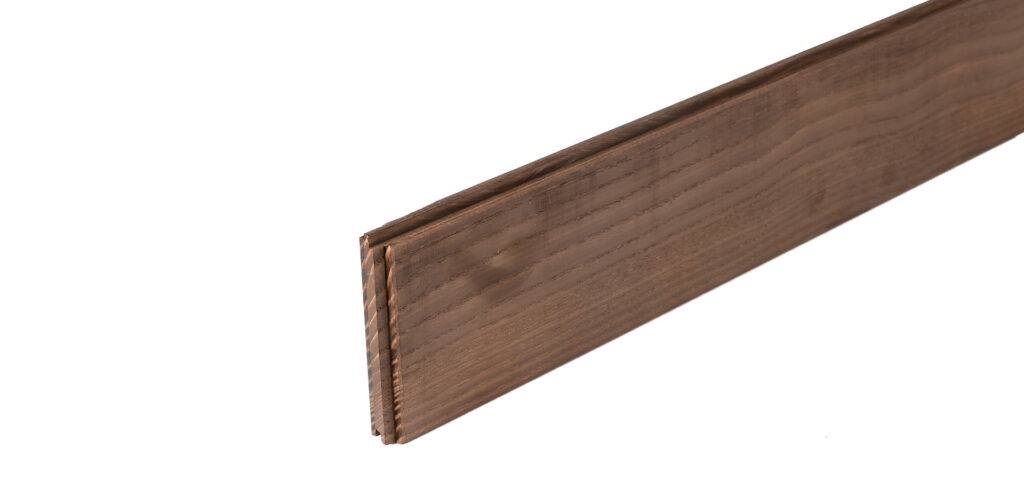
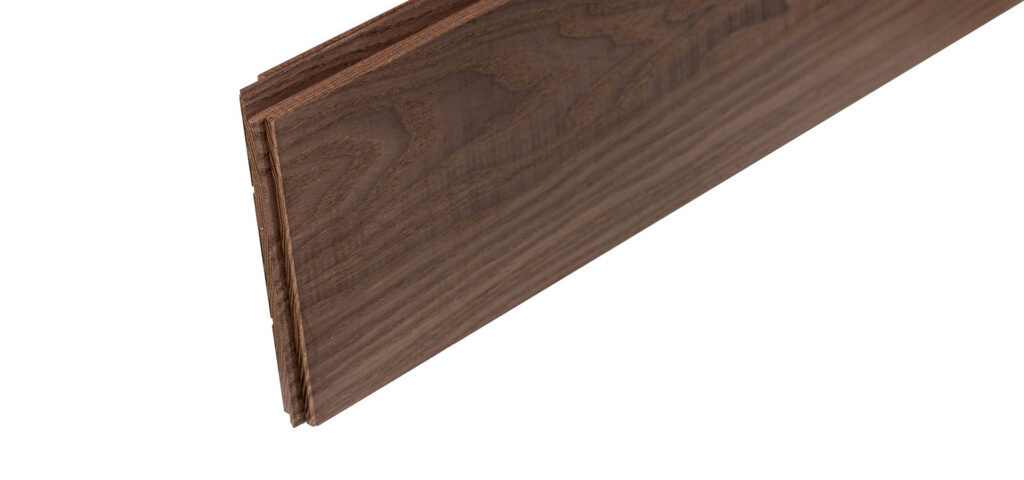
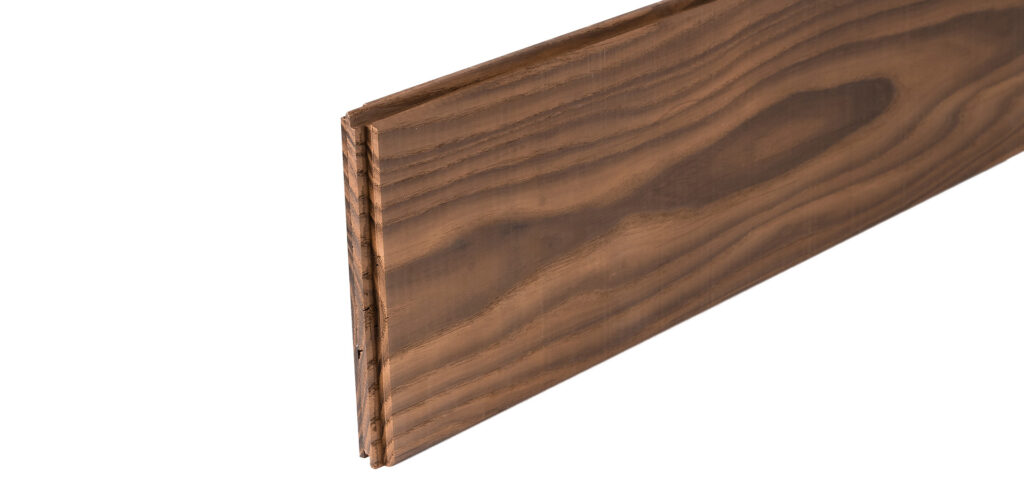
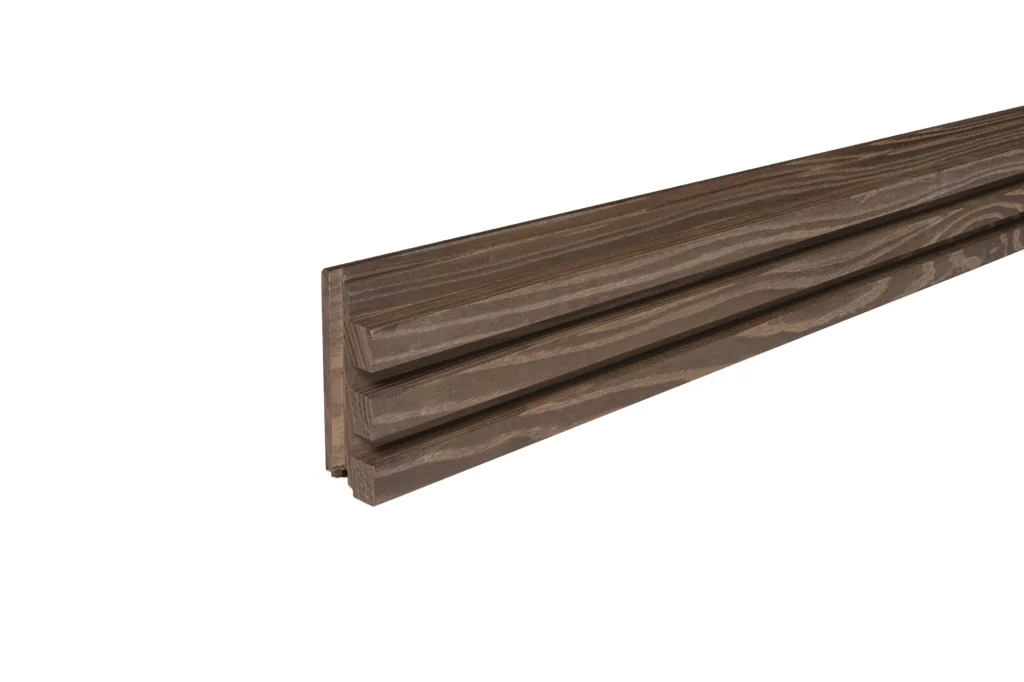
Once the species is selected, the next question is:
“How do you want the wood to look once it’s installed”
That’s where the profile comes in.
Q: What role does the profile play in the design?
Sean: Now that we’ve selected the species based on durability, cost, hardness or grain appearance, we need to decide what profile, or “shape,” best suits our design.
This is where the same species can start to take on a completely different personality.
Wider or narrower boards can change the look and feel of a project. The reveal, or the space between boards, can also be influenced by the profile.
For example, one of Thermory’s nickel-gap profiles can create a distinct architectural shadow line, while a tight Tongue-in-Groove (T/G) profile with a micro-bevel can create a sleek, modern appearance.
Profile Isn’t Just About Appearance
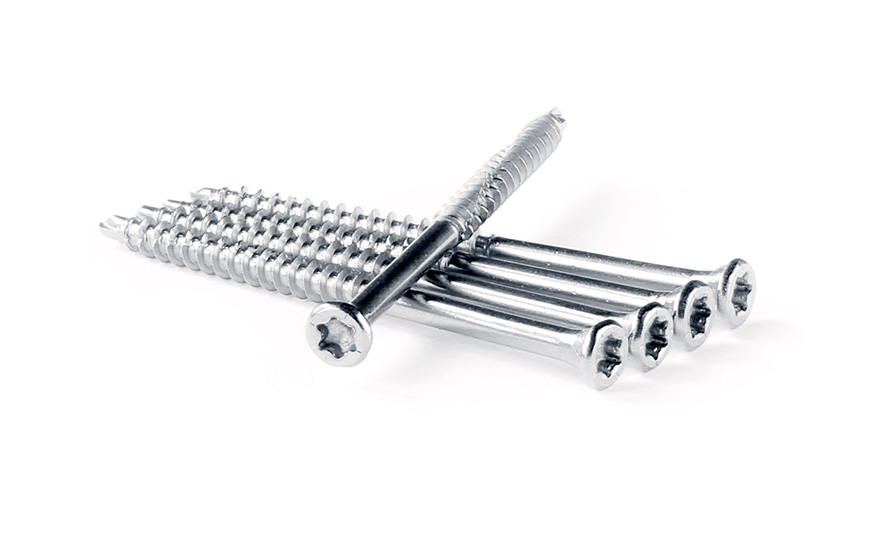
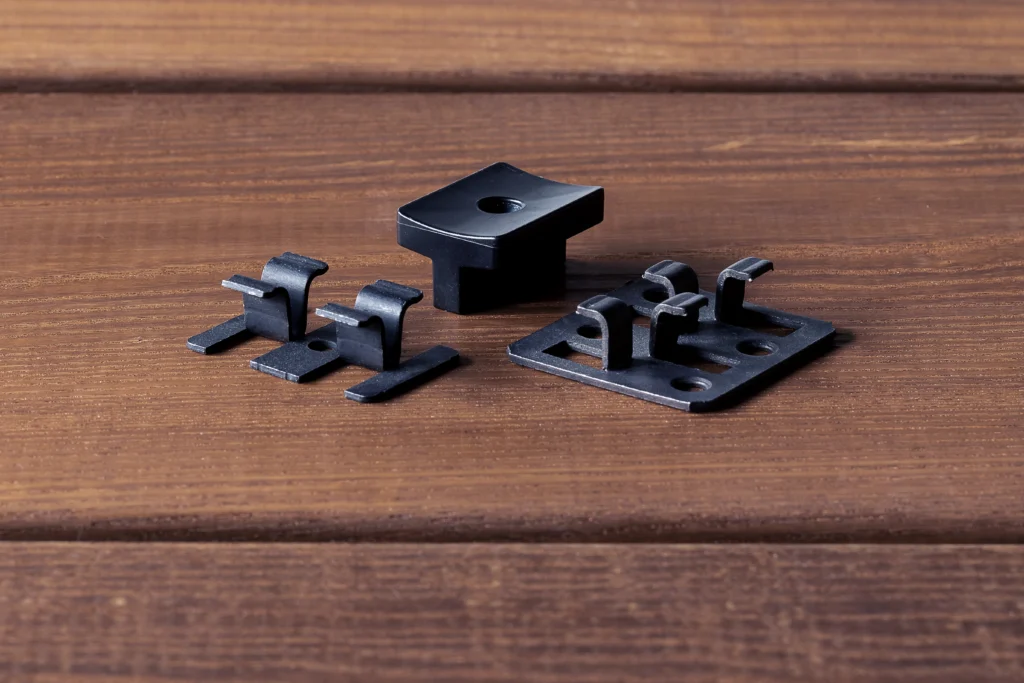
There’s another important consideration: how the material will be installed.
Sean: The profile also considers how this material will be installed—ungrooved for traditional face-fastening, or grooved for the use of concealed fasteners or hidden clips.
That means profile selection isn’t simply a design decision. It can also influence the installation system.
A customer might want a particular visual effect, but the right profile needs to work with the project’s application, fastening method and installation requirements.
So, What’s the Right Profile?
It depends on what you’re trying to accomplish.
Are you looking for:
- A wider, more expansive visual?
- A narrow, linear appearance?
- A defined architectural shadow line?
- A clean, modern T/G installation?
- Traditional face-fastening?
- Concealed fastening?
- More texture and visual interest for an interior or sauna?
The profile is where the wood begins to interact with the architecture.
Species gives the material its character. Profile gives the design its rhythm.
Step 3: Finish With Your Desired Look
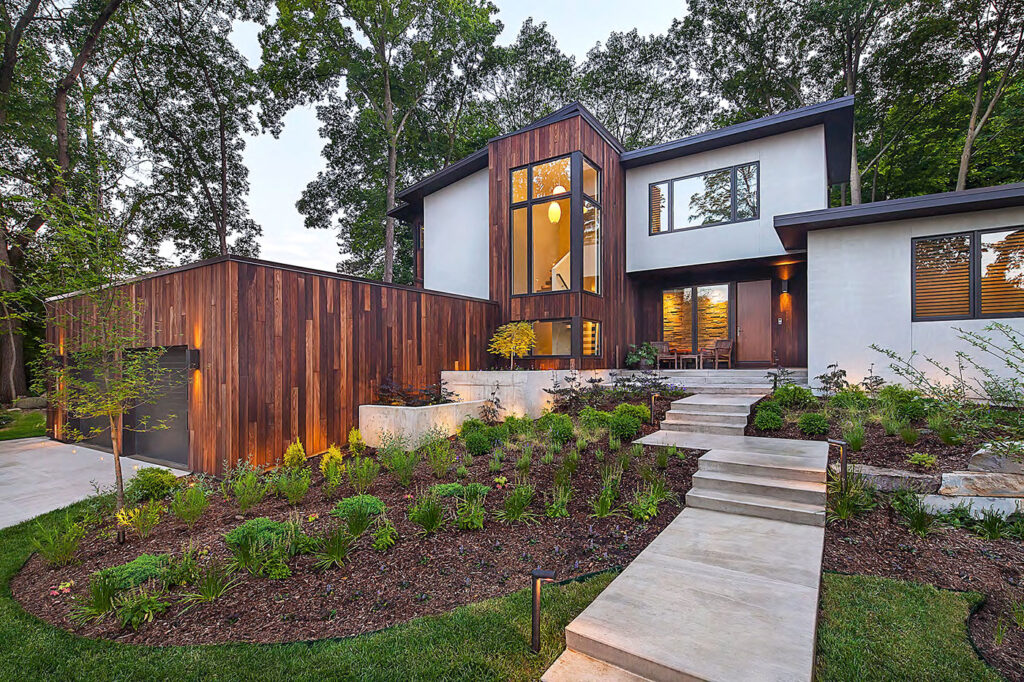
Now we’ve selected the species and the profile.
There’s one final decision:
“What do you want the wood to look like—and how do you want it to age?”
Q: What should customers consider when choosing a finish?
Sean: The final step will be choosing the right finish for our projects. We have to determine if we want to make a subtle change to fine tune a color to match our design, or if we want to make a dramatic change with a bold color like black.
But color isn’t the only consideration. We also need to think about exposure, UV, interior versus exterior application, maintenance and the desired long-term appearance.
Do we want a lasting color with minimal maintenance?
Or will we embrace the natural color evolution of the wood and relish the development of a rich patina over time?
Those are two very different (and equally valid) design approaches.
Let the Wood Weather Naturally
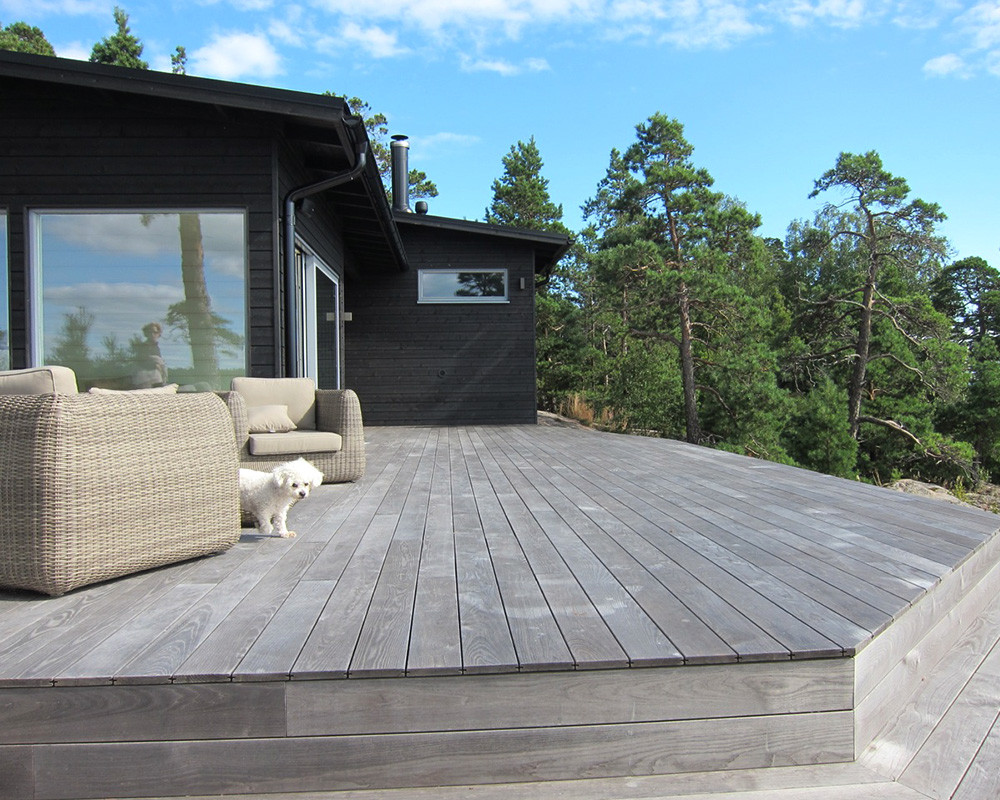
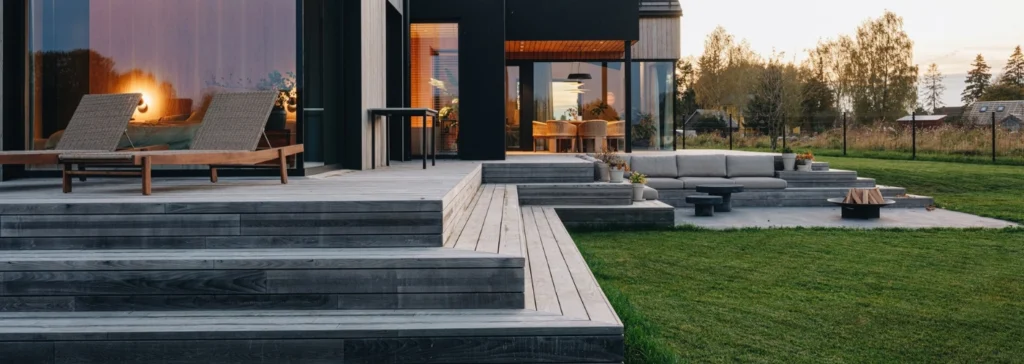
Thermally modified wood has a beautiful evolution when left unfinished outdoors.
Over time, exposure to sunlight and weather will gradually shift the wood’s appearance. The rich brown tones associated with freshly installed Thermory will naturally transition toward a silver-gray patina. For some projects, that’s exactly the goal.
Instead of trying to preserve the wood’s original color, the design embraces the natural aging process of real wood.
The wood changes. The design evolves with it.
Want to Keep the Rich Brown?
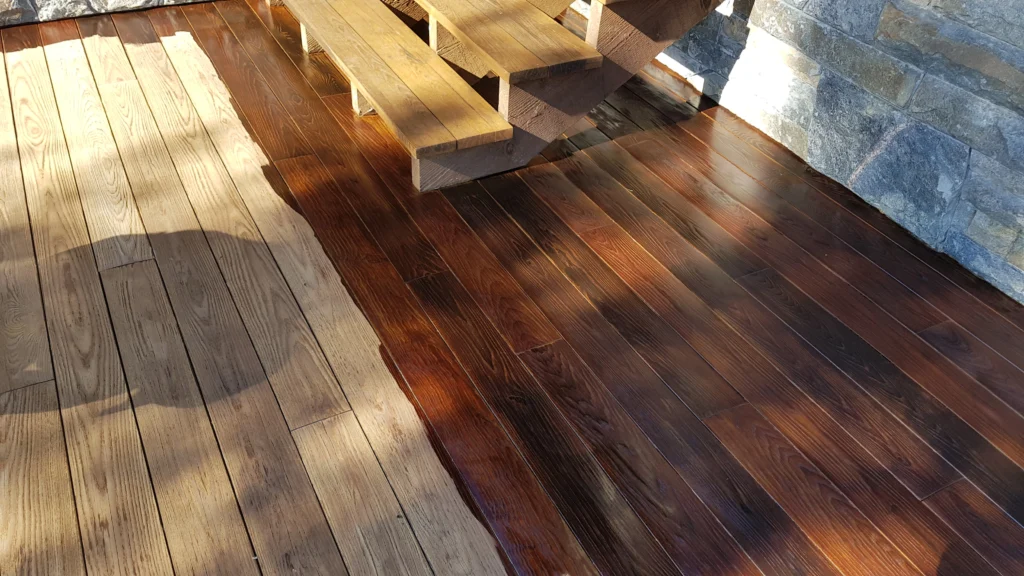
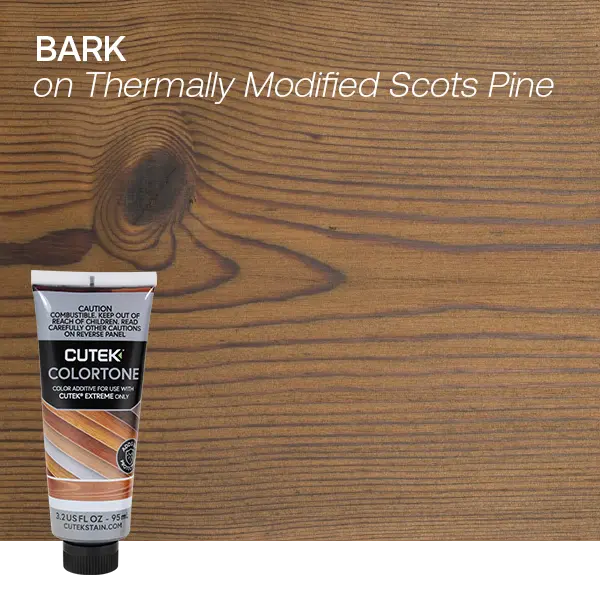
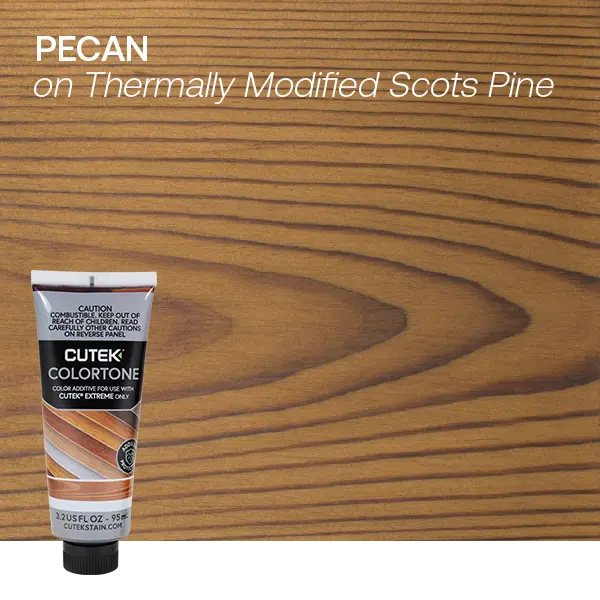
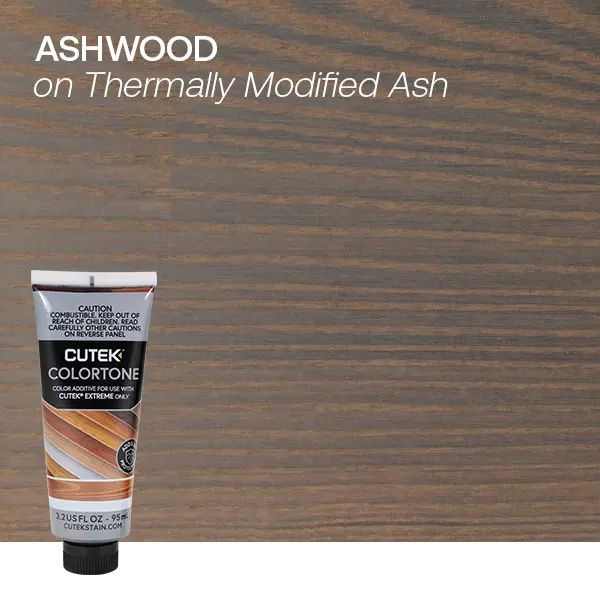
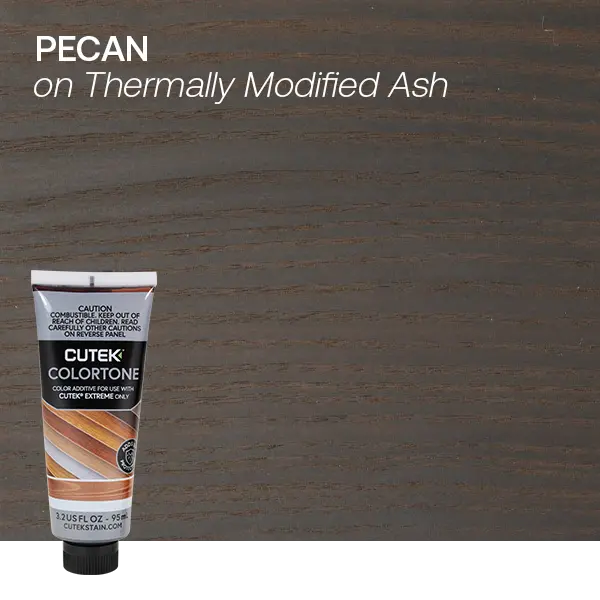
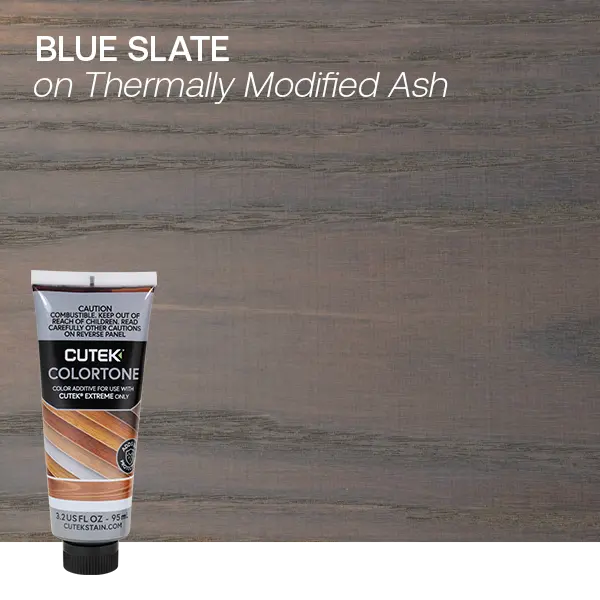
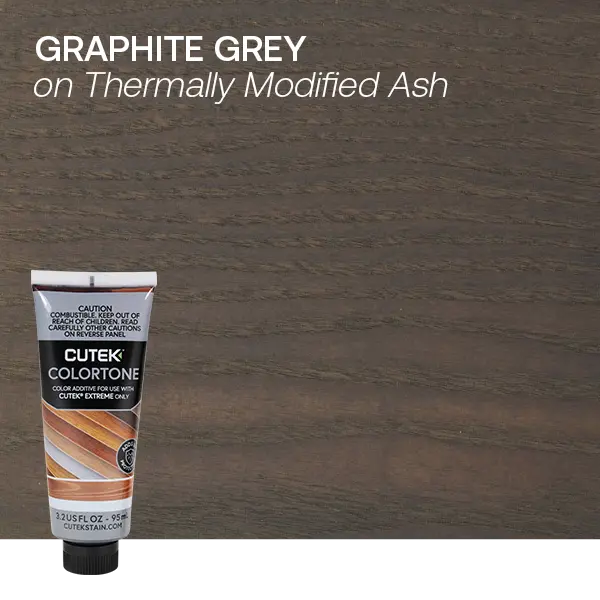
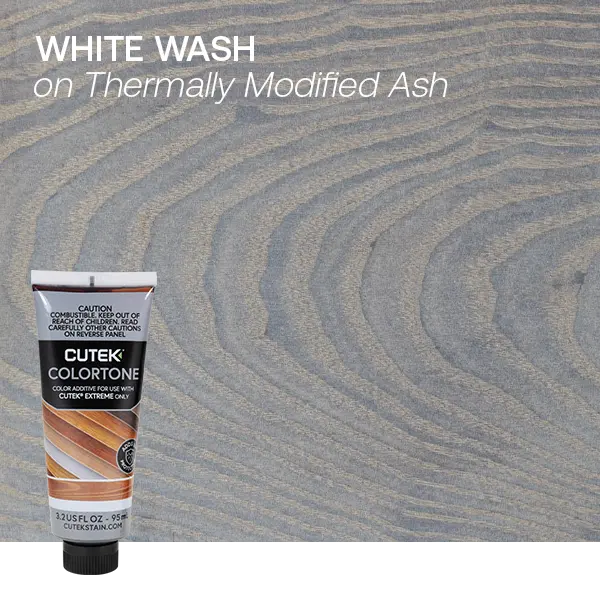
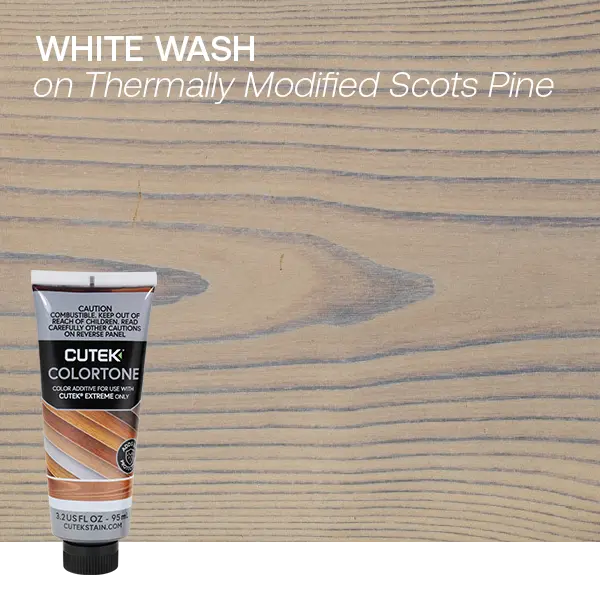
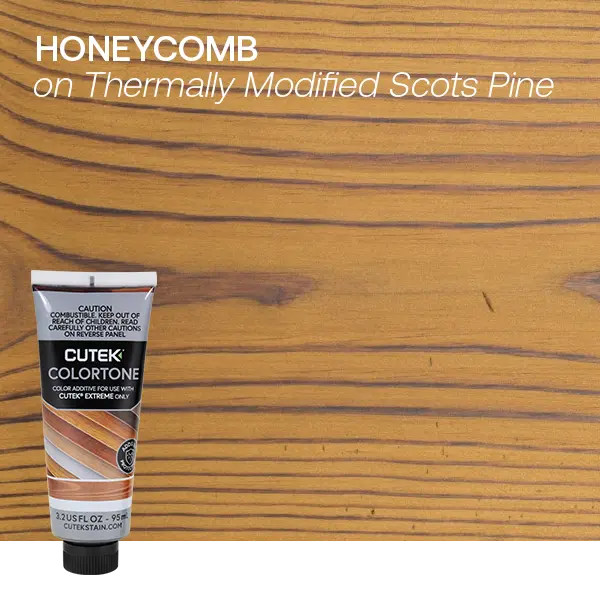
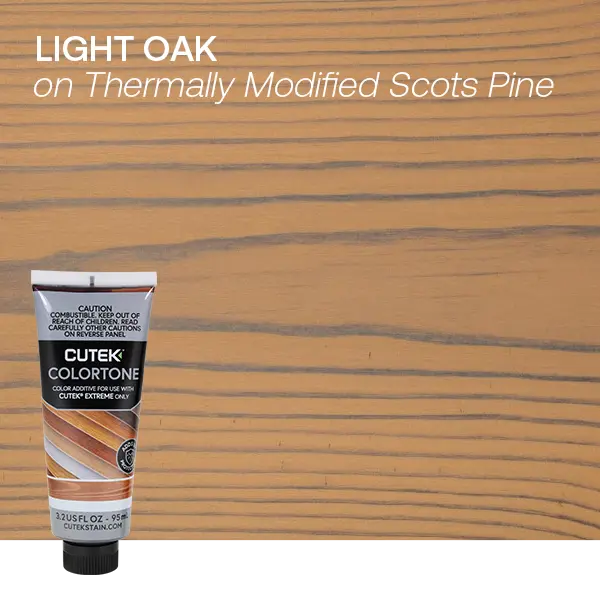
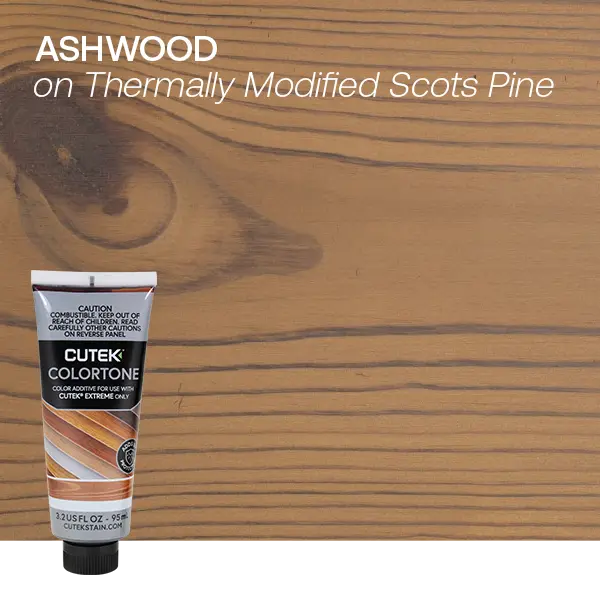
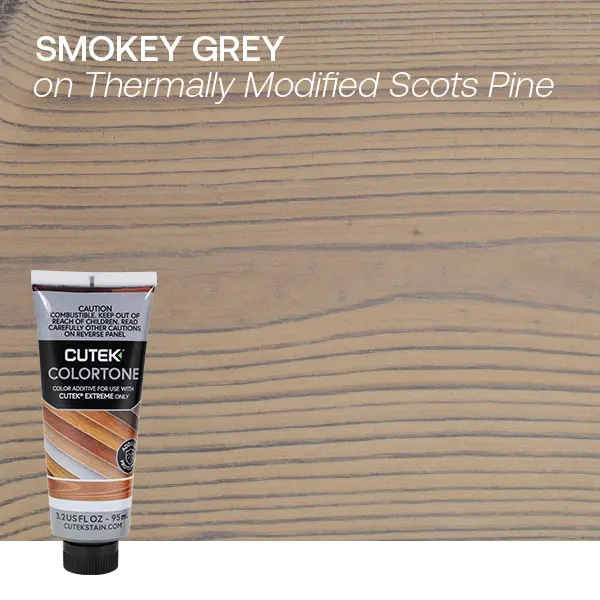
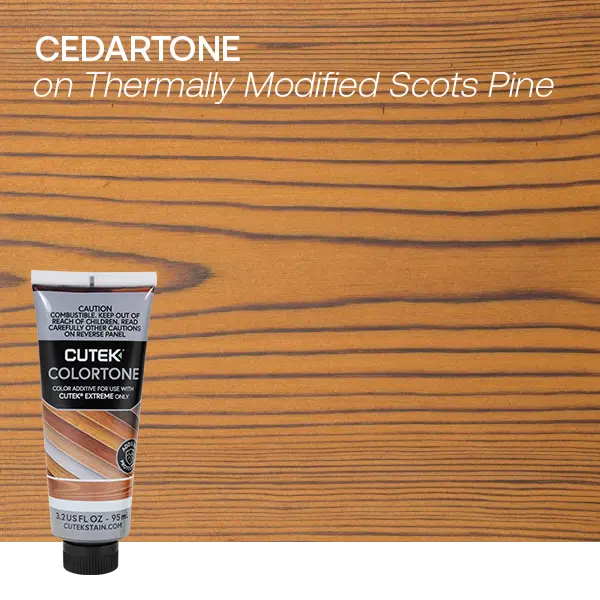
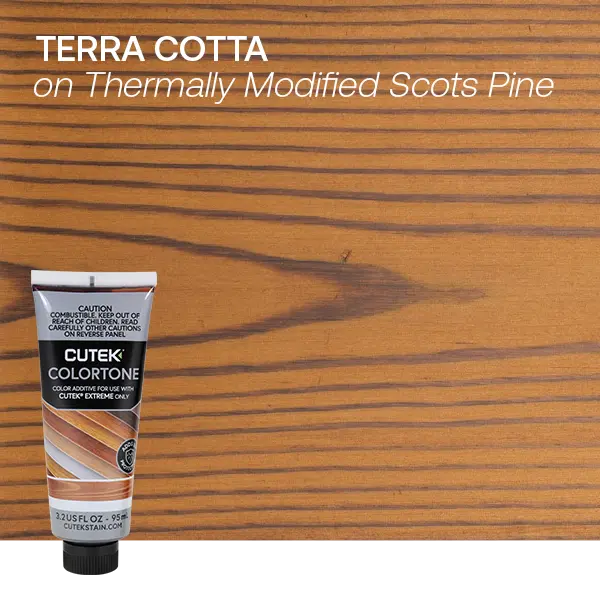
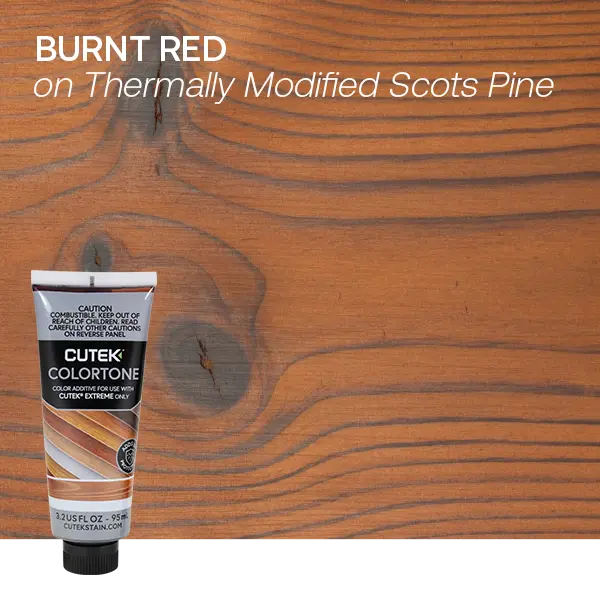
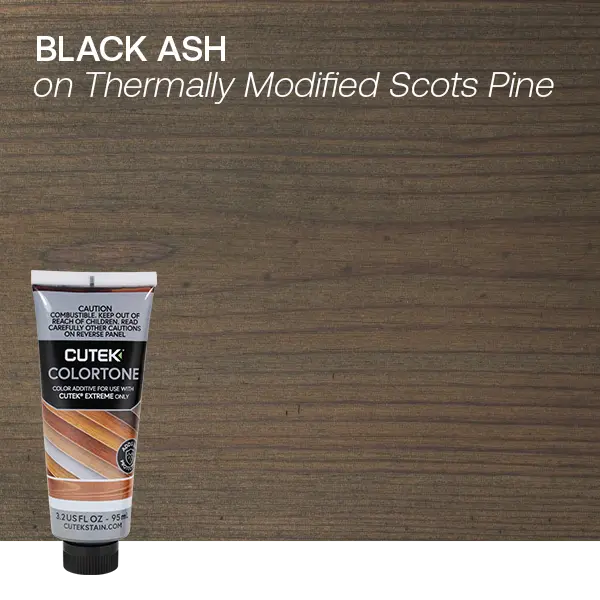
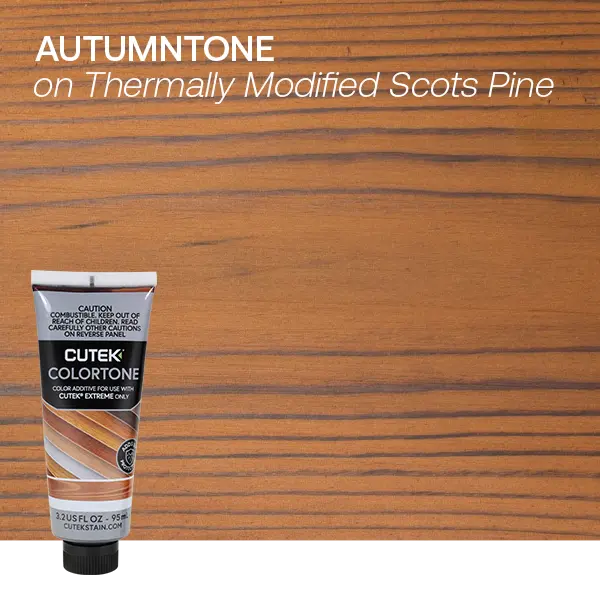
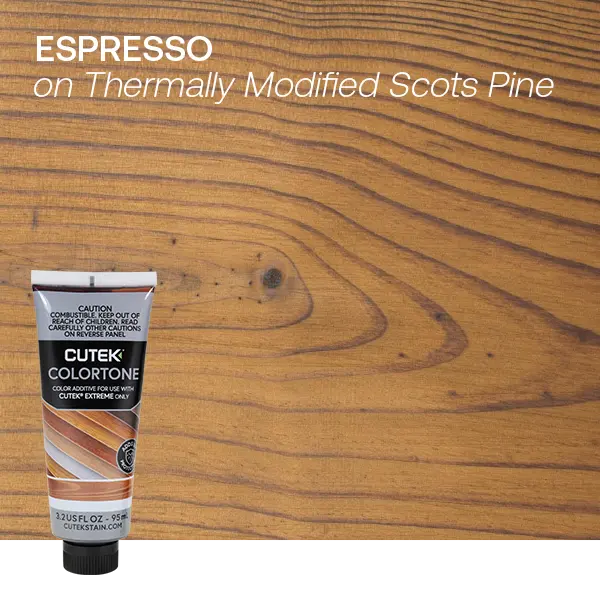
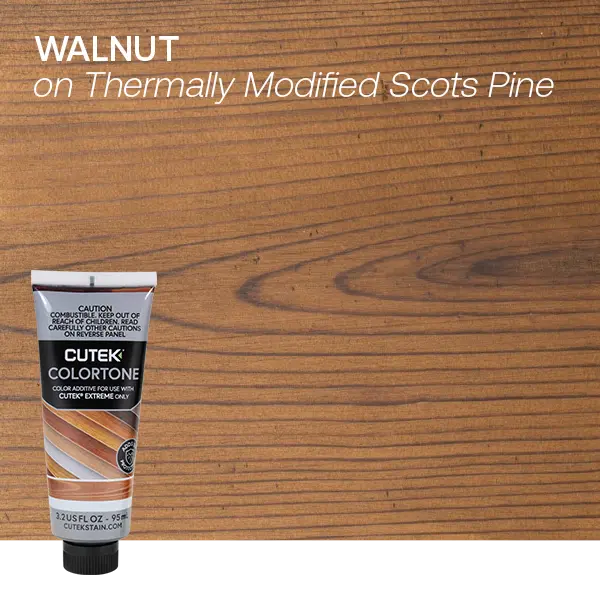
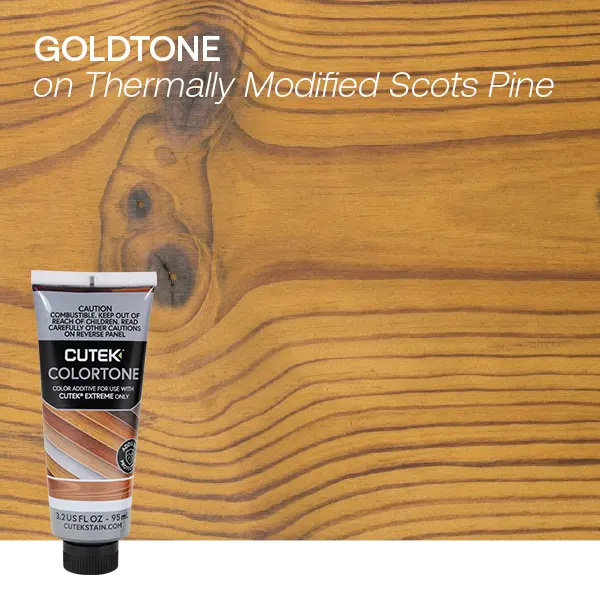
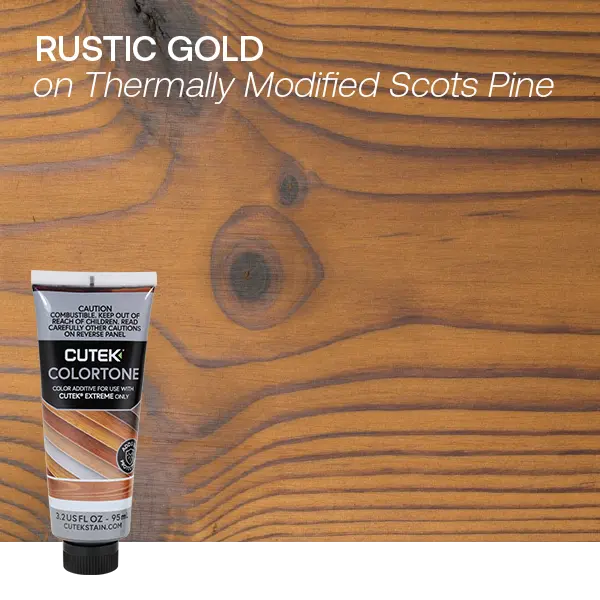
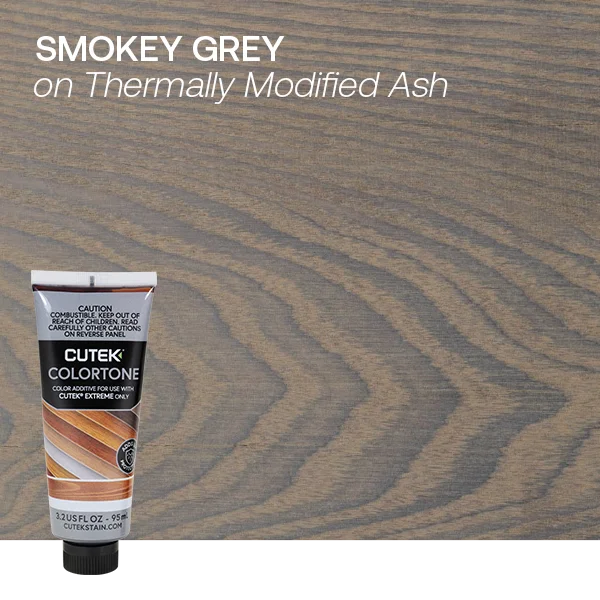
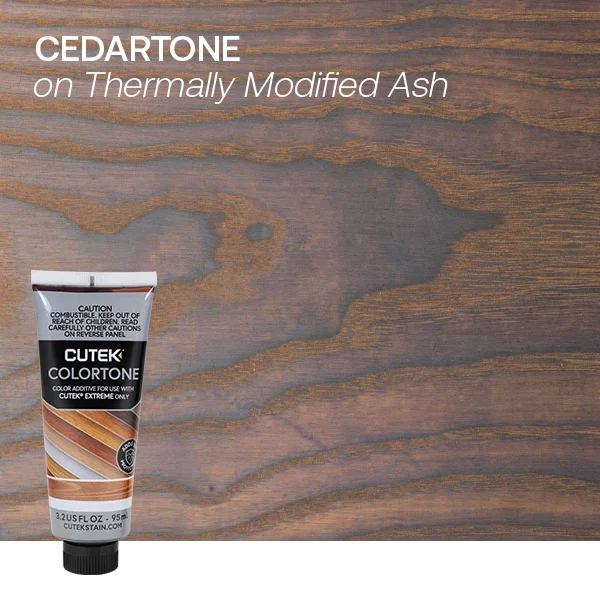
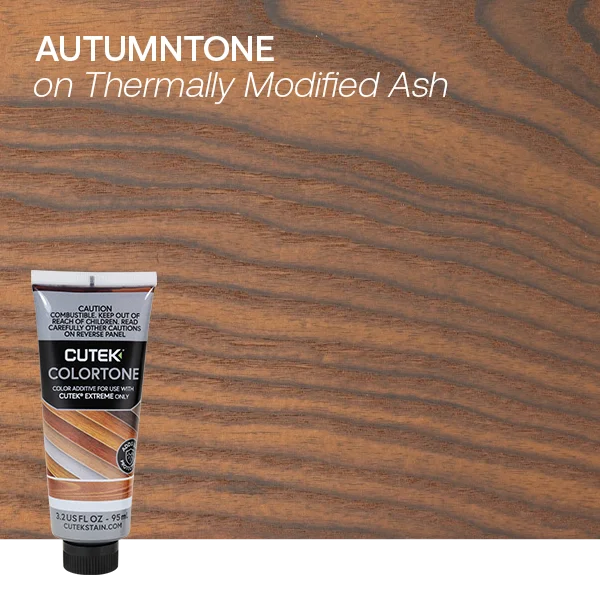
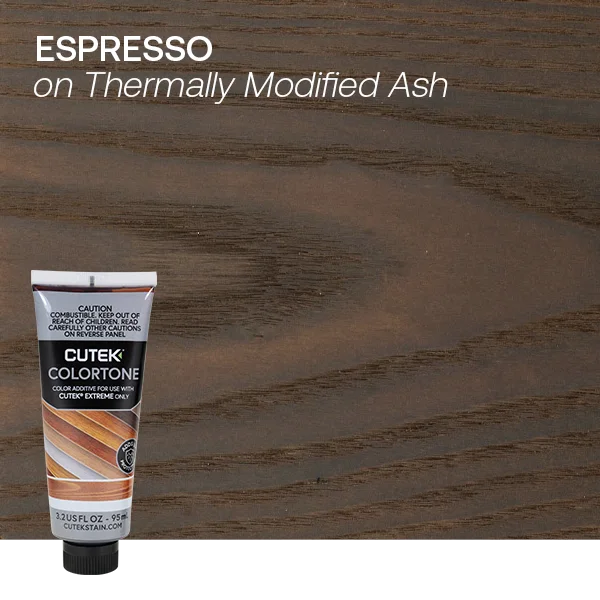
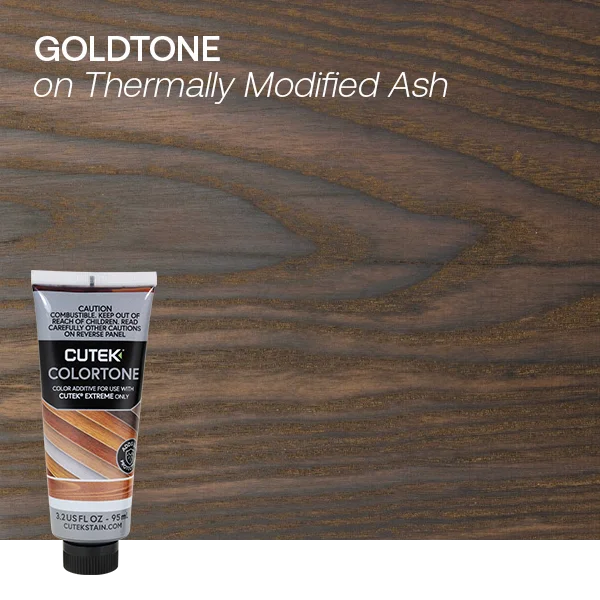
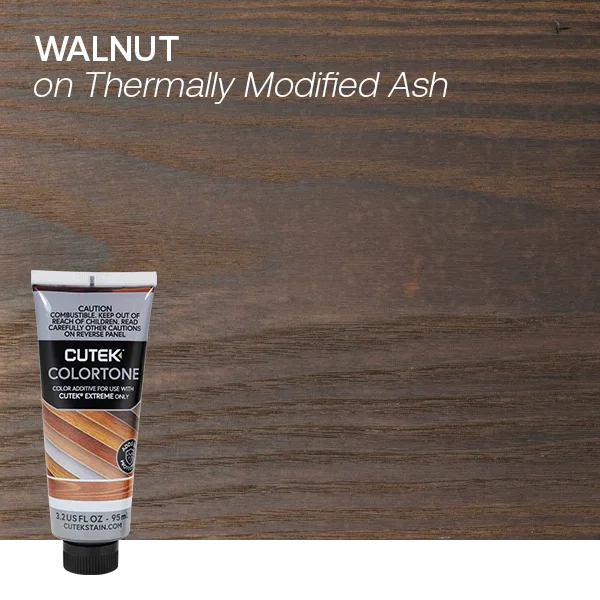
For customers who love the rich brown appearance of thermally modified wood and want to maintain it, CUTEK® Extreme with Colortone is our recommended option.
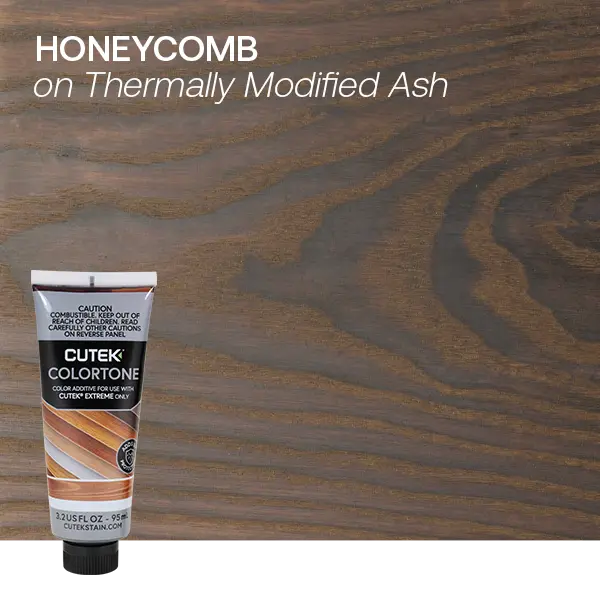
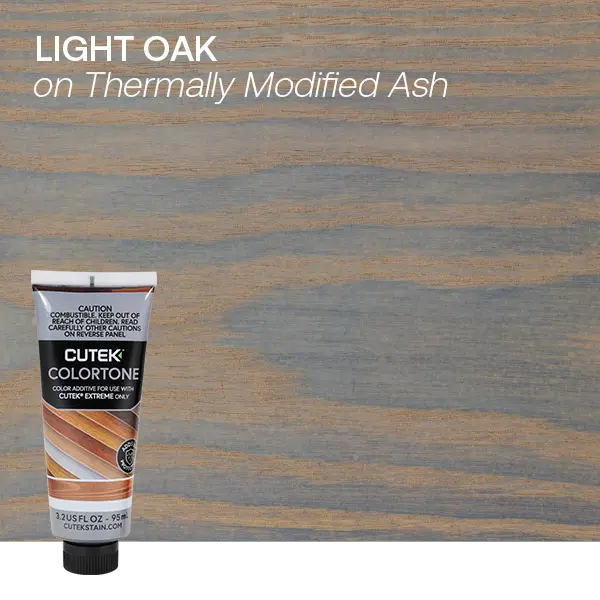
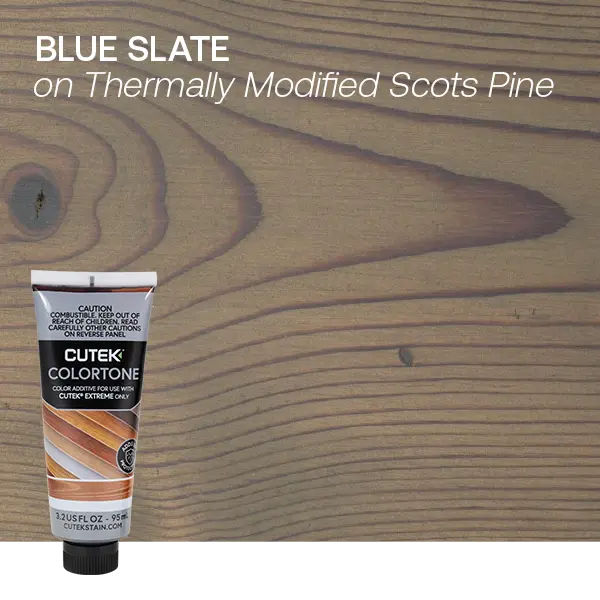
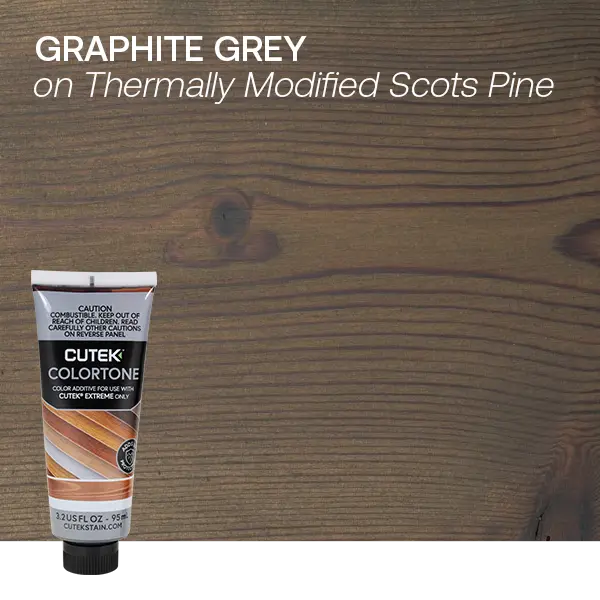
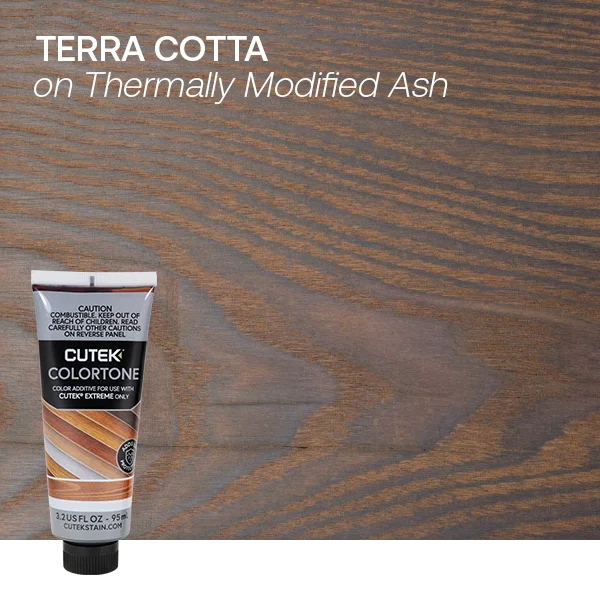
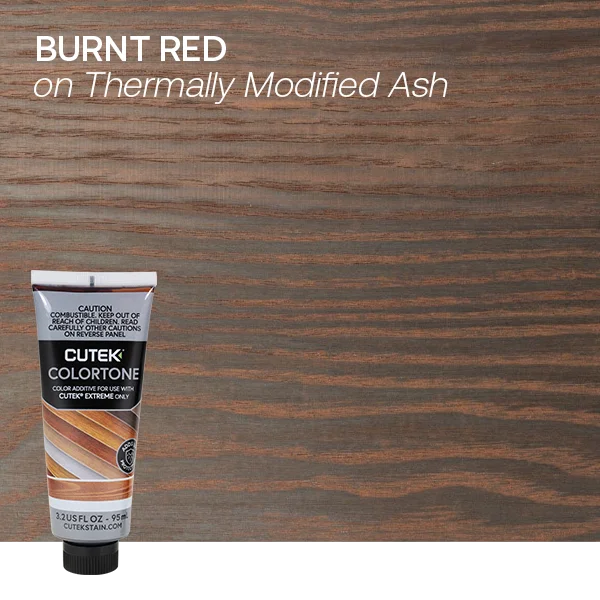
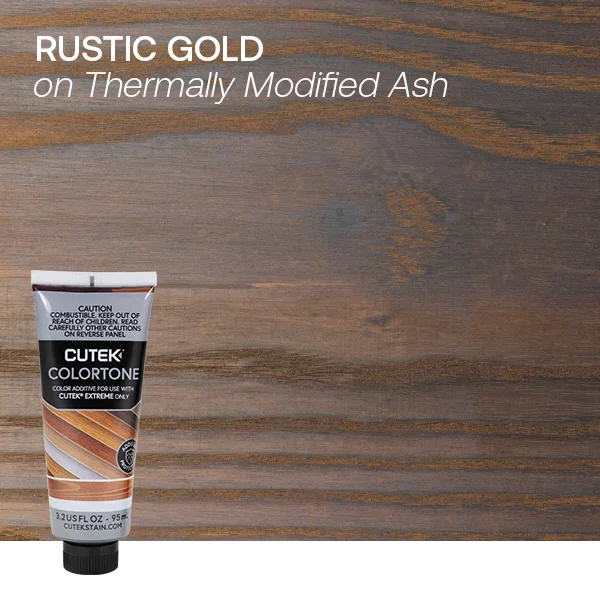
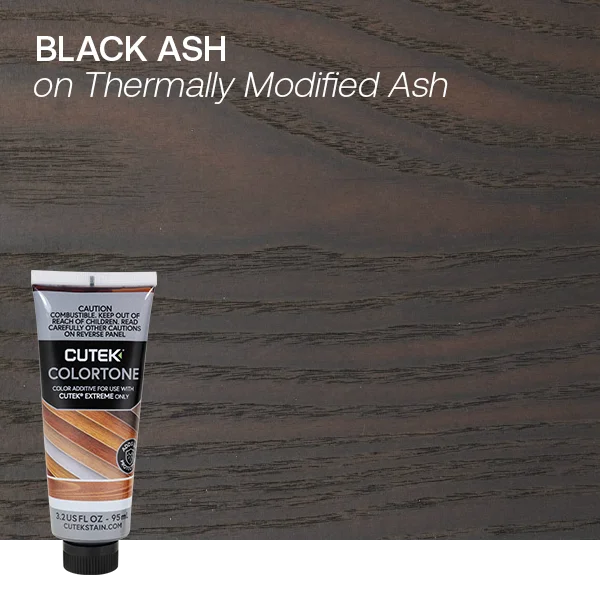
CUTEK’s penetrating oil system can help maintain and enhance the wood’s natural color while allowing the grain and character to remain visible. Colortones can also be used to fine-tune the appearance of the wood.
This makes it a particularly useful option when the goal isn’t to dramatically change the wood, but rather to preserve and enhance the look you already love.
Or Make It Vivid
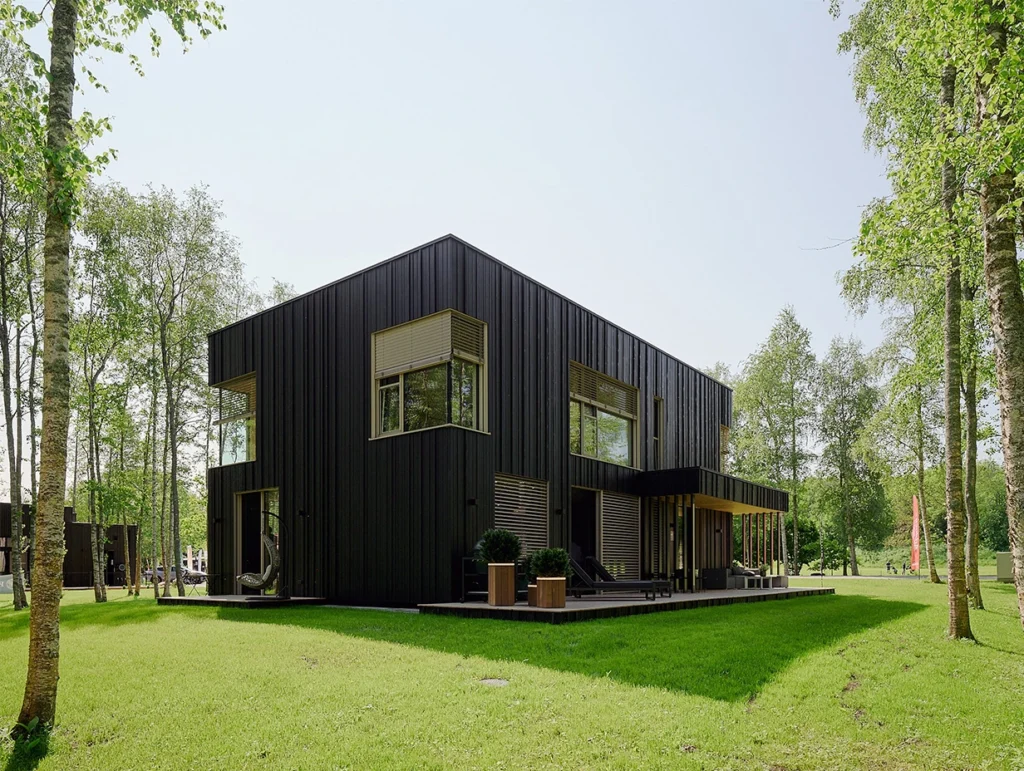
Sometimes subtle isn’t the goal.
Vivid by Thermory gives designers and homeowners another way to approach the finish.
Our Vivid collection features translucent, semi-sheer colors that allow the natural grain and texture of the wood to remain visible while changing the overall color expression.
That means you can take Thermory in a completely different direction—from subtle color adjustments to bold architectural statements.
Projects Manager, Rob Credi, shares:
“The natural color of thermally modified wood is beautiful on its own, but finishing gives you another level of design flexibility. With Vivid, you can introduce color while still allowing the natural grain and character of the wood to come through. And with CUTEK, you can enhance and maintain those rich brown tones. It really comes down to asking, ‘What do you want this wood to look like today, and what do you want it to look like five or ten years from now?’”
One Material. Many Possibilities.
Species determines the foundation.
Consider durability, hardness, grain, knots, appearance and cost.
Profile determines how the wood interacts with the architecture.
Consider board width, reveals, shadow lines, texture and fastening.
Finish determines how you want the wood to look—and how you want it to evolve.
Consider UV exposure, interior versus exterior use, color, maintenance expectations, and whether you’re preserving the original look or embracing natural weathering.
Put those decisions together, and the possibilities expand dramatically.
Species. Profile. Finish.
Photo Credits: Karl Kasepõld. Street Juice Film.