If you’ve been researching thermally modified wood, chances are you’ve typed a few of the same questions we hear every day.
And we get it—this category is growing fast, but not all information out there is created equal. After more than 25 years of working with thermally modified wood and helping define what it is today, we’ve seen what works, what doesn’t, and what truly lasts.
So, we’re answering the most common questions honestly and from real-world experience, so you can make the right call for your next project!
1. What is thermally modified wood?
Thermally modified wood is real wood that’s been enhanced using only heat and steam to improve its durability, stability, and resistance to decay.
The process permanently changes the wood at a cellular level, making it perform far beyond untreated lumber.
In short: it’s natural wood—just engineered by nature, perfected by heat.
2. How is wood thermally modified?
The thermal modification process involves heating wood to high temperatures (typically over 400°F) in a controlled, oxygen-limited environment.
This does a few important things:
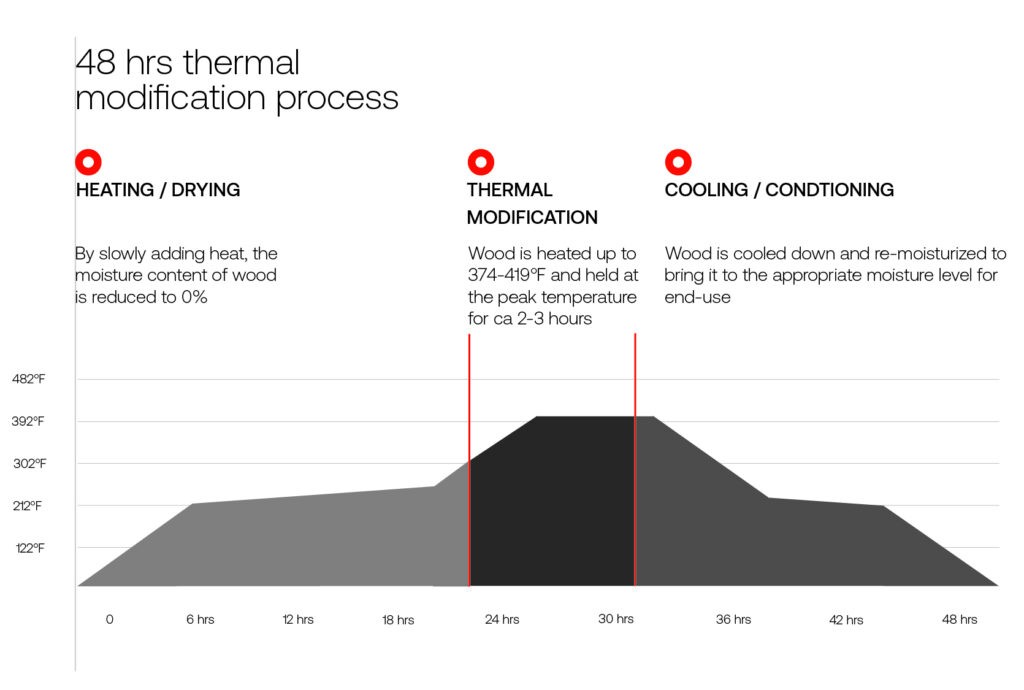
- Removes moisture from the wood
- Alters the cell structure
- Reduces the wood’s ability to absorb water in the future
The result is a more stable, durable material that stands up to the elements. We’re not adding anything to the wood—we’re refining what’s already there. It’s a process we’ve spent decades perfecting at scale, across both softwoods and hardwoods.
3. Heat-treated wood vs. thermally modified wood
Not all heat-treated wood is created equal, and not all manufacturers have the same track record. As the first company to commercialize thermally modified wood at scale, we’ve refined this process over decades to deliver consistent performance.
Basic heat treatment (like kiln drying) removes moisture, but it doesn’t fundamentally change the wood’s structure.
Our proprietary thermal modification goes much further. It:
- Uses significantly higher temperatures
- Expertly incorporates steam
- Permanently alters the wood’s chemistry
- Improves resistance to rot, decay, and movement
4. What are the benefits of thermally modified wood?

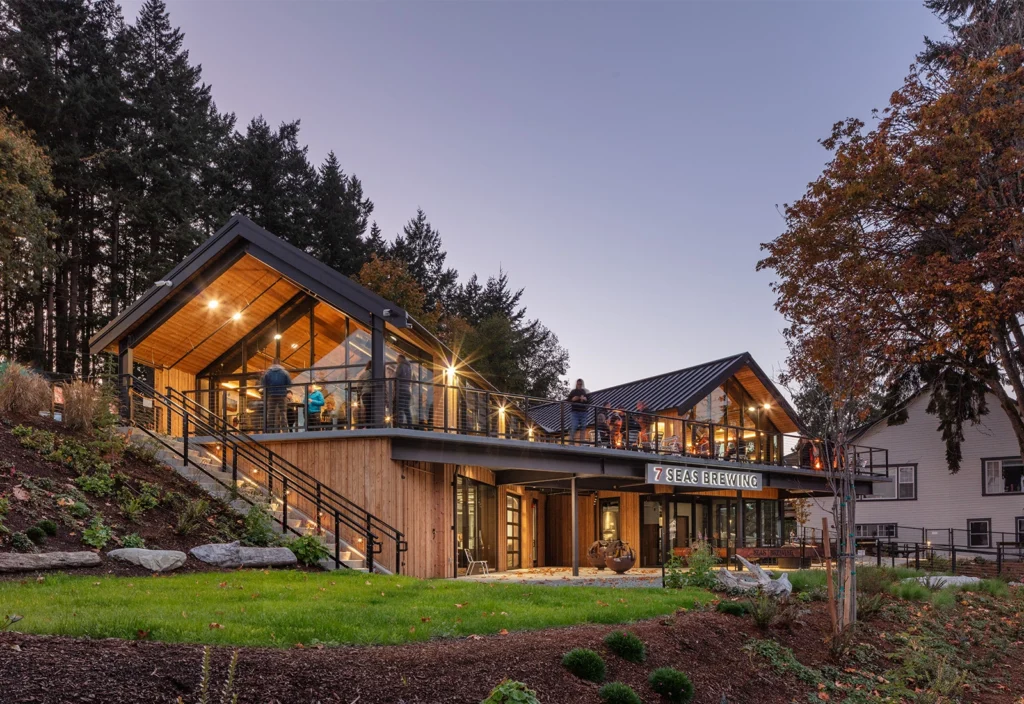
This is where thermally modified wood really stands apart.
Key benefits include:
- Exceptional durability (resists rot and decay)
- Dimensional stability (less shrinking, swelling, and movement)
- Lightweight yet strong
- Rich, consistent color throughout the board
- Improved insulation properties
Once you install it, you notice the difference immediately. Everything fits better, stays straighter, and performs longer.
5. Is thermally modified wood sustainable?
Yes! And when sourced responsibly like Thermory wood, it’s one of the most sustainable building materials available.
Because the process uses only heat and steam, it avoids the need for chemical treatments. And by enhancing the performance of abundant wood species, it reduces pressure on slower-growing hardwoods, like tropical rainforest species.
At Thermory, we take it a step further:
- We source wood globally, so no single forest is overharvested
- We use every part of the log, including offcuts for energy and other products
- We prioritize long lifecycle performance, reducing replacement needs
6. Is thermally modified wood non-toxic?
Our thermally modified wood is completely non-toxic.
Unlike pressure-treated lumber, it contains no added chemicals, making it safe for:
- Residential applications
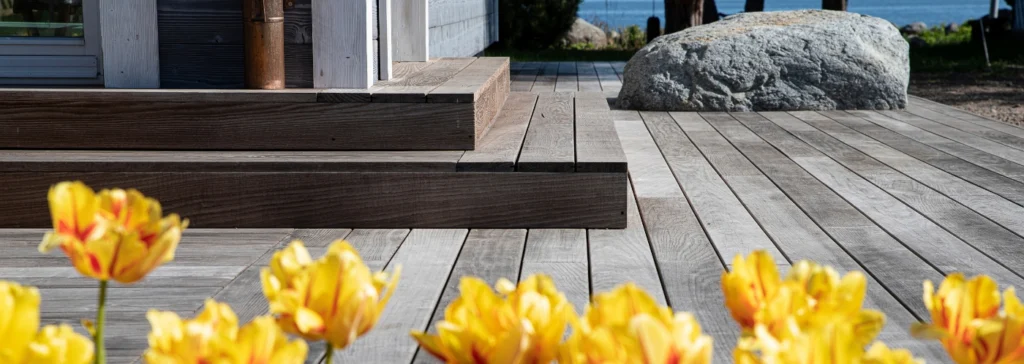
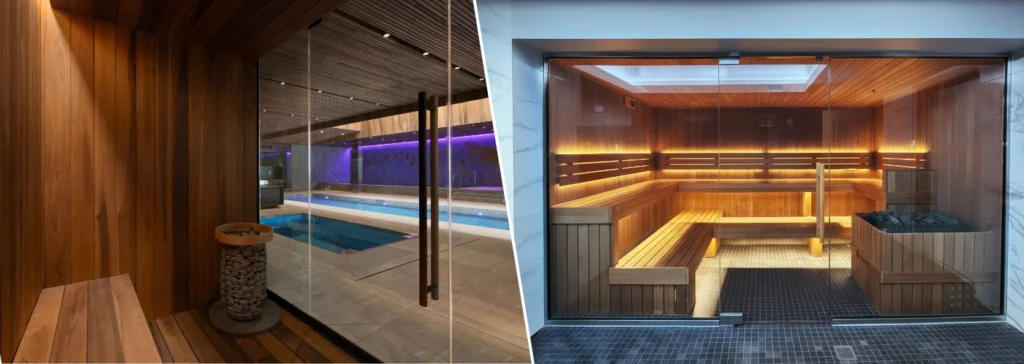
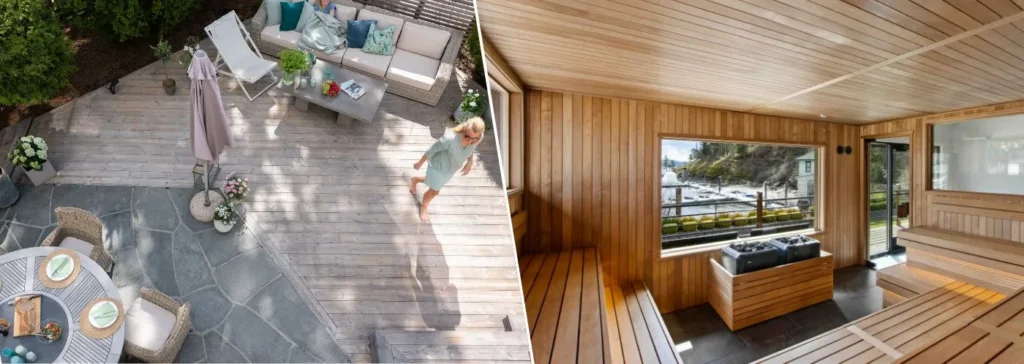
- Barefoot areas (like decking and saunas)
- Interior use
It’s a clean, natural material – just enhanced through heat and steam.
7. How long does thermally modified wood last?

Thermally modified wood is built for long-term performance.
Depending on the species and application, it can last 25–30+ years above ground when properly installed and maintained.
Its resistance to moisture and decay is what gives it that longevity.
8. Does thermally modified wood warp?
All real wood moves, but thermally modified wood moves significantly less.
Because the process reduces the wood’s ability to absorb moisture, it:
- Minimizes warping, cupping, and twisting
- Holds its shape over time
- Performs more predictably in changing climates
It’s still wood—but it behaves in a much more controlled way.
9. What are the pros and cons of thermally modified wood?
Pros
- Natural, chemical-free material
- Highly durable and stable
- Beautiful, consistent appearance
- Sustainable and responsibly sourced
- Easy to work with, light on tools
Cons
- Often a higher upfront cost than untreated wood
- Requires proper installation for best performance
- Like all wood, will naturally weather over time (can gray if left untreated)
Prefer gray right away? Explore our pre-weathered finish, Vivid Silver by Thermory.
10. Is thermally modified wood better than pressure-treated lumber?
It depends on your priorities—but for most modern applications, thermally modified wood offers clear advantages.
Compared to pressure-treated lumber:
- No chemicals
- Greater dimensional stability
- More refined appearance
- Better long-term performance
Pressure-treated lumber is often chosen for cost—but thermally modified wood is chosen for value: performance, longevity, and aesthetics.
Final Thoughts From Thermory
Thermally modified wood is an upgrade. It delivers the warmth and authenticity of real wood, without the common drawbacks that have traditionally come with it.
While the category is still new to many, it’s not new to us. With over 25+ years of experience bringing thermally modified wood to market at scale, we’ve helped shape what this material is today, and where it’s going next.
As more builders, architects, and homeowners prioritize performance and sustainability, it’s quickly becoming the new standard. It’s why thermally modified wood has moved from a niche material to a global building solution.
If you’re exploring thermally modified wood for your next project, start with the right information and the right material.
Have a question we didn’t answer? Let us know.
Photo Credits: Levi Ellyson, 501 Studios. Heywood Chan, YE-H PHOTOGRAPHY.