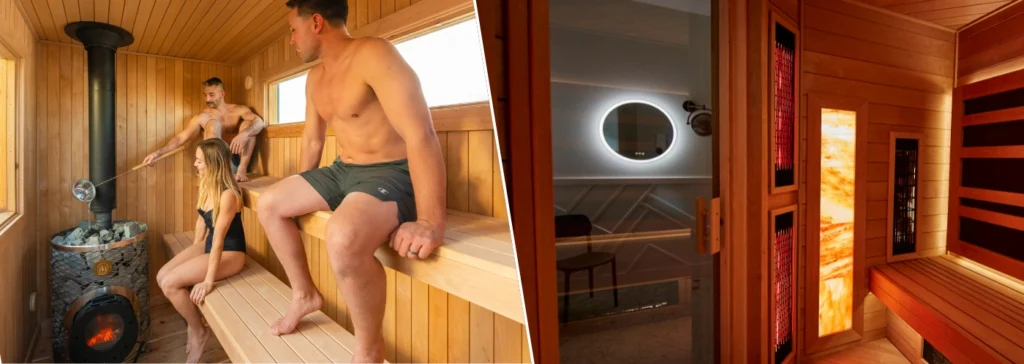
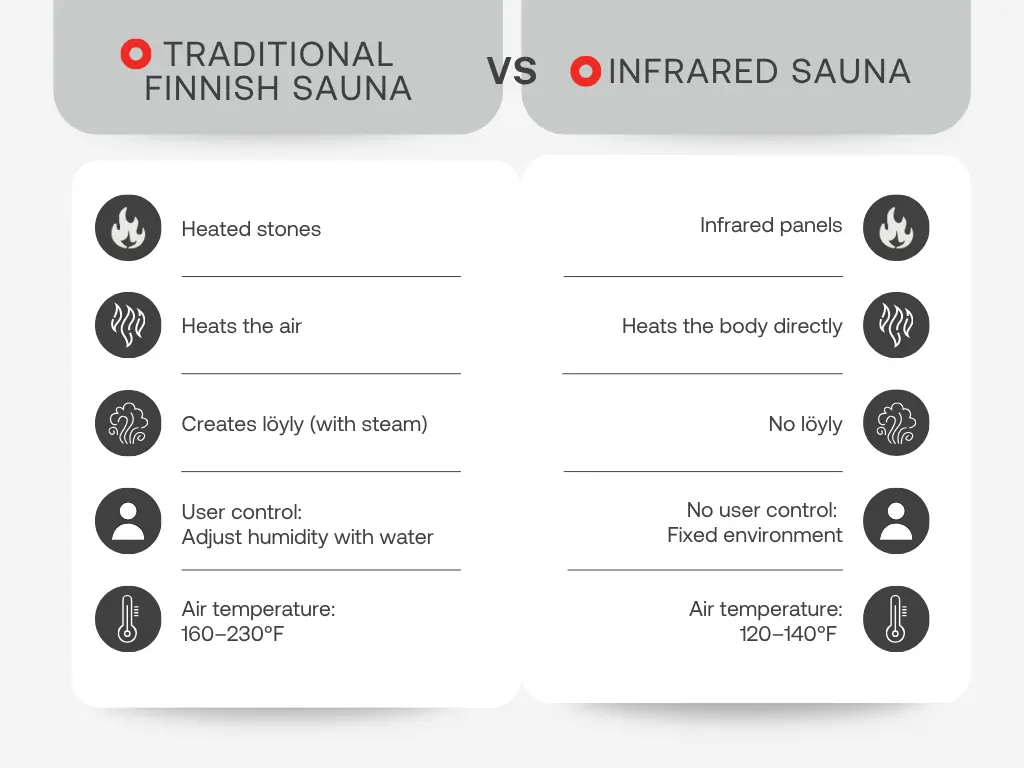
Infrared saunas are a relatively modern invention, developed largely to meet North American demand where installation constraints, power limitations, and building codes made traditional saunas more challenging. They use infrared panels to emit radiant heat that warms the body directly, allowing the surrounding air to remain cooler.
The environment is dry, compact, and often designed for one to four people, with simple plug-in installation similar to a large appliance.
Traditional Finnish Saunas Operate Very Differently.
Instead of heating the body directly, they heat the air using a stove filled with stones, bringing room temperatures to roughly 160–230°F (70–110°C). Water poured onto those hot stones creates löyly — a burst of steam that defines the sauna experience. The bather controls humidity, intensity, and rhythm by adjusting how much water is added.
This difference isn’t just technical. It’s cultural.
The Role of Löyly
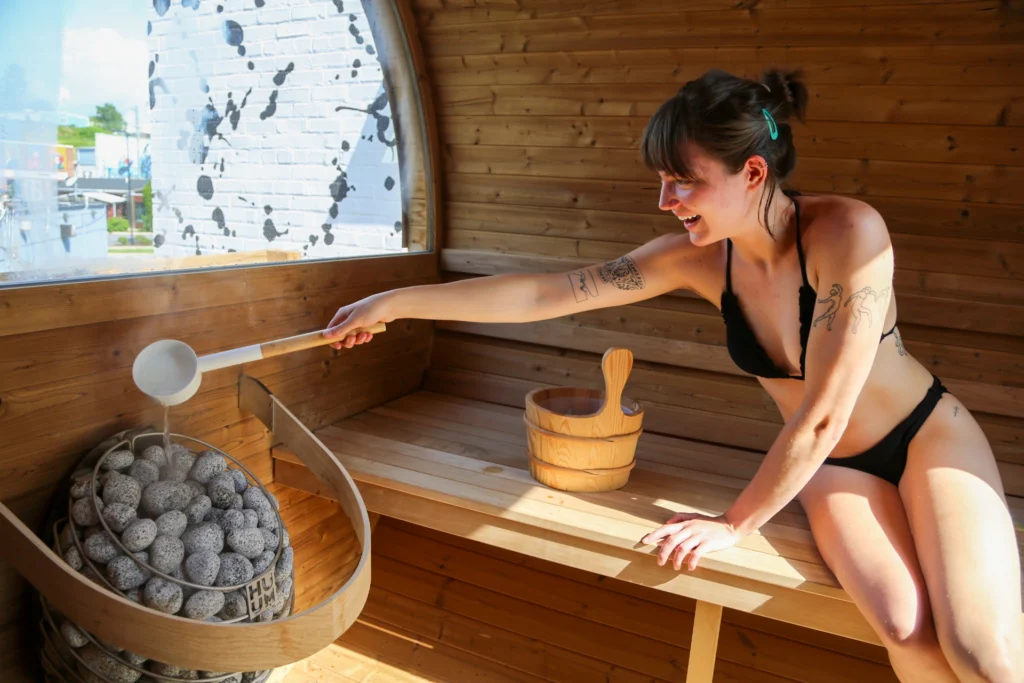
Löyly is the heart of the traditional sauna experience. Each pour changes the environment instantly. Heat rises, humidity increases, breathing shifts, and the sensation of warmth intensifies across the skin. As the steam dissipates, the room settles again until the next pour.
Infrared saunas cannot recreate this dynamic environment. Without heated stones and steam, the air remains dry and static. Even with add-ons, the rhythm created by löyly simply doesn’t exist.
For people raised with sauna culture, that absence is unmistakable.
Two Different Ways of Heating the Body with Sauna
At their core, traditional and infrared saunas work through different heating principles.
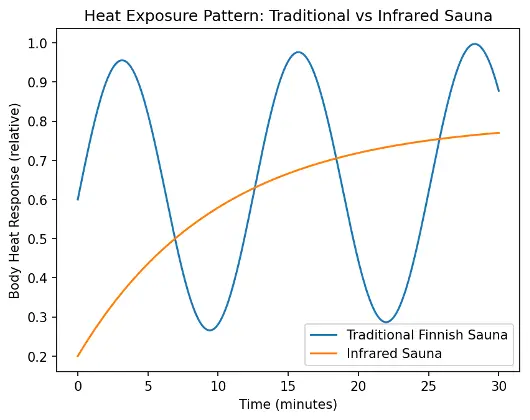
Traditional sauna bathing creates cycles of heat and recovery. Water is poured on stones, steam rises, heat intensifies, then gradually softens. This rhythm shapes the experience.
Infrared heat, by contrast, tends to remain steady and consistent throughout the session.
Finnish Saunas Offer Higher Temperatures and Dynamic Experiences
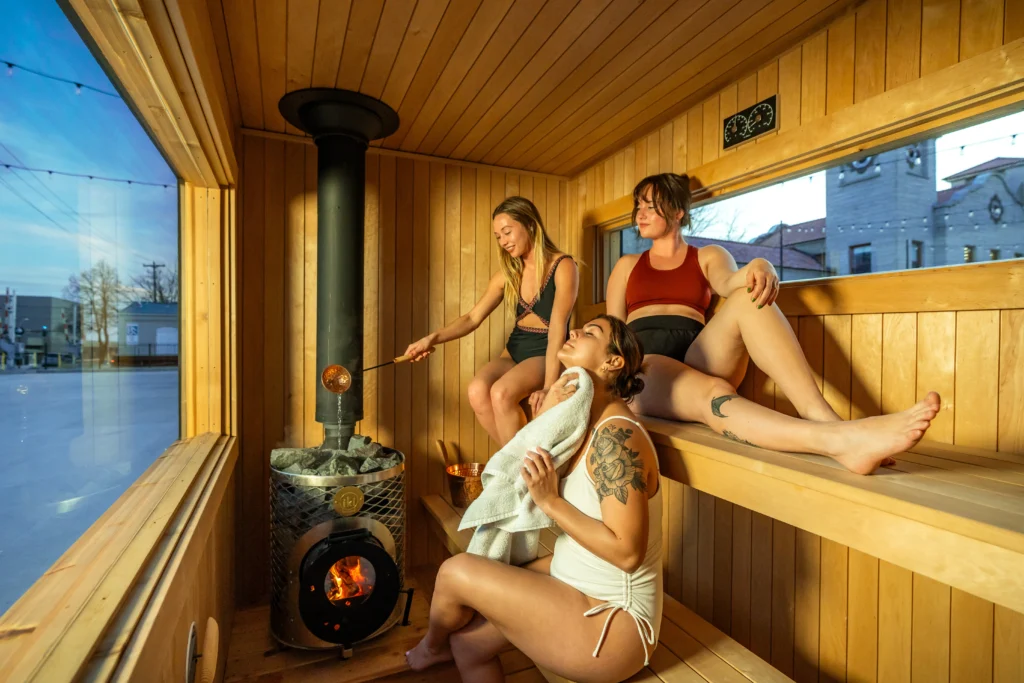
Because traditional saunas operate at higher temperatures (160–230°F) and allow humidity control, the experience is typically more intense but shorter, often broken into multiple rounds with cooling periods.
Infrared sessions are usually longer and milder (120–140°F), which some people prefer as an introduction to heat therapy.
What the Research Shows: Regular Finnish Sauna Use Improves Overall Well-Being
Traditional sauna bathing is one of the most extensively studied wellness practices in the world.
Large-scale Finnish studies spanning decades have linked regular sauna use with a range of health benefits, including:
- Improved cardiovascular health and circulation
- Reduced blood pressure and arterial stiffness
- Faster muscle recovery and joint pain relief
- Reduced risk of respiratory disease
- Lower risk of dementia and Alzheimer’s disease
- Stress reduction, improved mood, and better sleep
Many of these effects are attributed to the intense cardiovascular response produced by high heat and steam. During a traditional sauna session, heart rate can rise to levels comparable to moderate exercise, while blood vessels dilate and sweating increases dramatically.
Infrared saunas may also provide benefits such as relaxation, improved circulation, and muscle relief. However, the body of research supporting them is much smaller and more recent. While infrared radiation can penetrate the skin differently, scientists are still studying whether lower temperatures produce the same long-term cardiovascular and metabolic effects.
Does Less Heat Mean Less Benefit?
This is where the conversation becomes nuanced. Traditional saunas place significant demand on the cardiovascular system. Heart rate rises rapidly, blood vessels expand, and the body works hard to regulate temperature.
Infrared saunas generally warm the body more gradually, producing lighter sweating and a lower cardiovascular load. For some users, particularly beginners or those sensitive to high heat, this gentler experience may feel more accessible. But whether lower temperatures deliver the same long-term benefits remains an open scientific question.
What is clear is that traditional sauna bathing has a long, consistent track record of study and cultural use. Infrared saunas are still catching up.
Built to Last vs. Built for Convenience

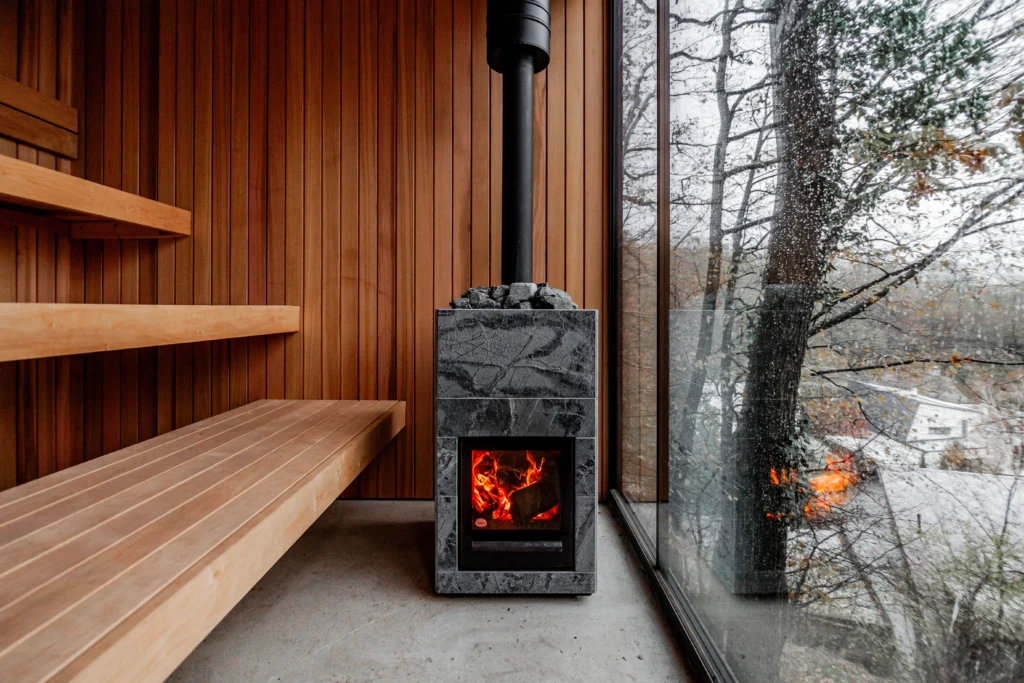
In Nordic countries, strict regulations govern sauna construction, ventilation, and material quality. Woods are selected specifically for their ability to handle heat and humidity safely. Thermally modified wood is often chosen for its dimensional stability, durability, and resistance to moisture movement.
Many infrared saunas, by contrast, are designed primarily for convenience and affordability. They often rely on engineered materials, minimal ventilation, and mass-produced components.
Infrared saunas can be a gateway to sauna — a starting point. But traditional Finnish saunas are something else entirely. Today, modern research continues to validate what Nordic cultures have understood for generations: regular sauna bathing supports cardiovascular health, recovery, relaxation, and overall well-being.
But beyond the science, the traditional sauna remains something deeper. It is a place for tradition and connection. A space shaped by culture, family, resilience, and time. Explore our collection of authentic Finnish-inspired sauna kits and materials.
Photo Credits: Sauna House, NC. Nordak Sauna. Katarina Janickova
References
- Laukkanen JA, Kunutsor SK. The multifaceted benefits of passive heat therapies for extending the healthspan: A comprehensive review with a focus on Finnish sauna. Temperature (Austin). 2024 Feb 25;11(1):27-51. doi: 10.1080/23328940.2023.2300623. PMID: 38577299; PMCID: PMC10989710.Laukkanen, T. et al. (2017). Sauna bathing is inversely associated with dementia and Alzheimer’s disease. Age and Ageing.
- Vatanserver, F. & Hamblin, M.R. (2012). Far infrared radiation (FIR): its biological effects and medical applications. Photonics and Lasers in Medicine.
- Behzadi P, Gravel H, Neagoe PE, Barry H, Sirois MG, Gagnon D. Impact of Finnish sauna bathing on circulating markers of inflammation in healthy middle-aged and older adults: A crossover study. Complement Ther Med. 2020 Aug;52:102486. doi: 10.1016/j.ctim.2020.102486. Epub 2020 Jun 16. PMID: 32951736.
- Gravel H, Behzadi P, Cardinal S, Barry H, Neagoe PE, Juneau M, Nigam A, Sirois MG, Gagnon D. Acute Vascular Benefits of Finnish Sauna Bathing in Patients With Stable Coronary Artery Disease. Can J Cardiol. 2021 Mar;37(3):493-499. doi: 10.1016/j.cjca.2020.06.017. Epub 2020 Jun 29. PMID: 32615263.
- Kunutsor SK, Laukkanen JA. Does the Combination of Finnish Sauna Bathing and Other Lifestyle Factors Confer Additional Health Benefits? A Review of the Evidence. Mayo Clin Proc. 2023 Jun;98(6):915-926. doi: 10.1016/j.mayocp.2023.01.008. PMID: 37270272.
- Sastriques-Dunlop S, Elizondo-Benedetto S, Zayed MA. Sauna use as a novel management approach for cardiovascular health and peripheral arterial disease. Front Cardiovasc Med. 2025 Mar 11;12:1537194. doi: 10.3389/fcvm.2025.1537194. PMID: 40134984; PMCID: PMC11933885.